
Senior Cat Meowing a Lot: Why Old Cats Get More Vocal
A senior cat meowing a lot can be attention-seeking or a medical sign like thyroid trouble, dementia, or fading senses. How to tell, and when to see the vet.
A senior cat meowing a lot has usually got one of two things going on, and telling them apart matters. Some of it is behavior: cats meow to get what they want, and an old cat has had years to learn how well it works on you. But a real increase in an older cat, especially a new one, is often medical, driven by the diseases and changes that come with age. Because several of those are serious and treatable, the safe order is to rule out a medical cause first, and only then to treat the extra noise as a habit.
This is general guidance, not a diagnosis of your cat. A clear change in how much or how she vocalizes is worth a vet's ear.
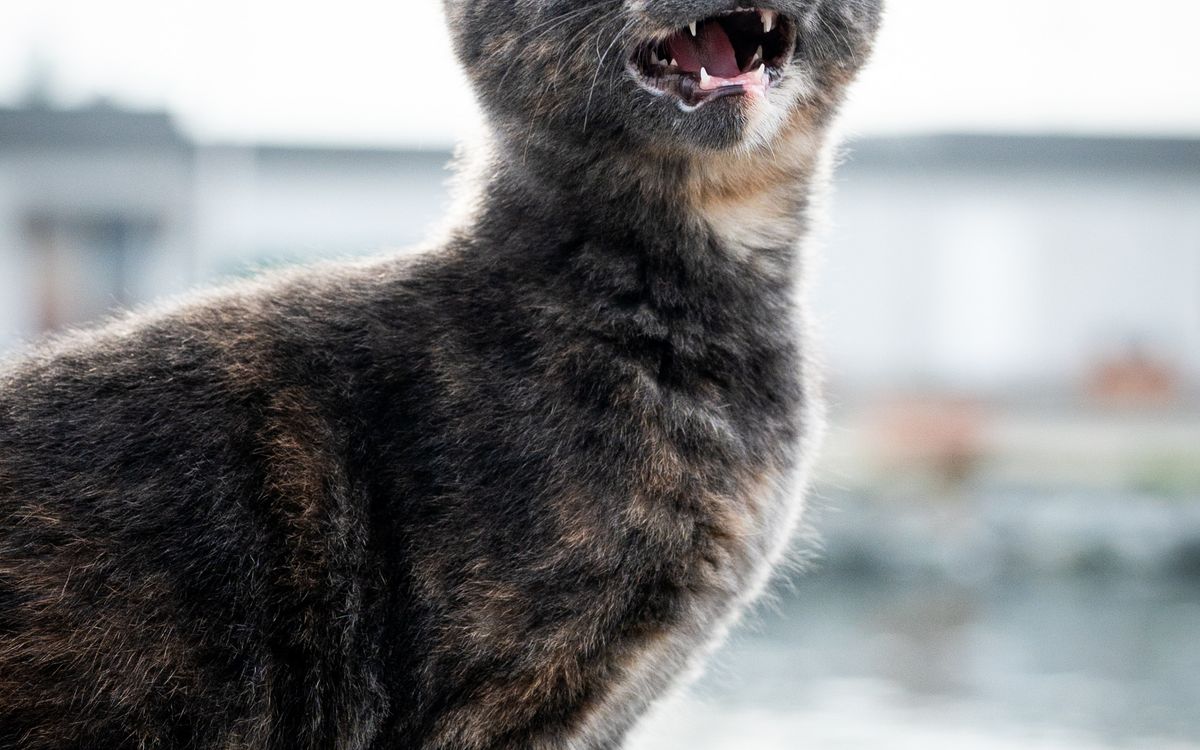
The short version: more meowing in an old cat can be attention-seeking and learned, or a sign of a medical problem like an overactive thyroid, high blood pressure, dementia, pain, or fading hearing. A sudden or marked increase deserves a vet check first. If she mainly yowls at night, there is a separate guide for that. Once illness is ruled out, you can gently reshape the habit.
Is it normal for a senior cat to meow more?
Partly, and partly not. Some cats are simply talkers, and any cat can learn that a meow brings food, a lap, or a door opened. As PetMD notes, sometimes, we unwittingly teach our cats to talk, because when they meow they often get what they want, so it becomes a learned behavior. A lifelong chatterbox meowing her usual amount is just being herself.
What is worth a closer look is a real change: an old cat who has become markedly more vocal, or started a new kind of yowl, especially if it arrived over days or weeks. In a senior cat, that shift is more often a signal than a personality quirk.
The medical reasons old cats get more vocal
Several common conditions of old age announce themselves partly through the voice, which is why a marked increase in meowing belongs on the list of behavior changes worth ruling out at the vet before anything else.
- Dementia. Feline cognitive dysfunction is one of the classic causes. PetMD describes cats who, as they age, develop Alzheimer's-like syndromes and odd behaviors such as excessive, persistent meowing, often a lost, disoriented yowl. This is the cognitive dysfunction of an aging brain.
- An overactive thyroid. Hyperthyroidism winds a cat up. PetMD notes that these cats are often on high drive and can be exceptionally vocal as well as restless, usually alongside weight loss and a big appetite.
- High blood pressure. Often riding along with thyroid or kidney disease, hypertension shows up here too: PetMD notes that cats with high blood pressure may meow more, and more incessantly, than healthy cats.
- Pain. A cat in discomfort may cry more, so a new vocal streak sits among the quiet signs of pain worth taking seriously.
- Fading senses. A cat losing her hearing or sight often gets louder, partly because she cannot hear herself. PetMD notes that many cats become increasingly vocal when they lose these senses, and that deaf and blind cats will meow loudly and repeatedly. A cat whose sight and hearing are fading may simply be calling out to find you.
The through-line is that an old cat rarely gets loud for no reason. The reason is often fixable, which is exactly why it is worth finding.
When an old cat is meowing for attention, not illness
Once your vet has ruled the medical causes out, you are usually left with the ordinary, stubborn fact that meowing works. A cat who has learned that noise brings you running will keep making it, and the harder truth is that we taught her. The fix is not to punish the meowing, which only frightens her, but to stop rewarding it: try not to leap up at every cry, give her attention and food when she is quiet rather than when she is loud, and keep her days full enough, with gentle play and company, that she has less reason to call. It is slow work, and it only works once you are sure the meowing is a habit and not a symptom.
If she mainly yowls at night
If the crying clusters after dark, that is its own pattern with its own short list of causes, from a fading mind to an empty house at 3am. There is a separate guide to a senior cat crying at night that covers what nighttime yowling tends to mean and how to ease it, which is worth reading if the noise is mostly nocturnal rather than all day.
When to see the vet
Treat a sudden or marked change in your cat's voice as a reason to book a visit. PetMD's rule is a good one: a trip to the vet is recommended for any sudden behavior changes in your cat, including excessive meowing. Go sooner if the new vocalizing comes with weight loss, increased thirst, restlessness, disorientation, or any other change, since that combination points at the treatable diseases above. A cat who has always been chatty and is otherwise well is a different matter, and mostly just wants you to know she is there.
Frequently asked questions
Is a cat meowing more with age normal? Some is normal, learned behavior, since meowing gets a response. But a marked increase in an old cat, or a new kind of yowl, is often medical, so a clear change is worth a vet check rather than assuming she is just being demanding.
Why has my old cat suddenly started meowing so much? Common reasons in senior cats include an overactive thyroid, high blood pressure, dementia, pain, and fading hearing or sight, all of which PetMD links to increased vocalizing. A sudden change deserves a vet visit to sort a treatable illness from a habit.
How do I get my senior cat to stop meowing so much? First rule out a medical cause with your vet. If it is behavioral, do not punish her; instead, avoid rewarding the meowing, give attention when she is quiet, and keep her engaged. Never withhold food or comfort she genuinely needs.
Why is my deaf cat meowing loudly? Often, yes, and louder. PetMD notes that cats losing their hearing or sight become increasingly vocal, partly because a deaf cat cannot hear her own voice to modulate it.
Should I worry about a senior cat yowling? Worry enough to have a sudden or marked change checked, since several serious but treatable conditions of old age drive it. A steady, lifelong chattiness in a well cat is not a concern.
The bottom line
An old cat who has got loud is usually telling you something, whether it is that her thyroid is racing, her mind is adrift, her ears are failing, or simply that she has learned you will come. The kind thing is to find out which before deciding what to do about it. Biscuit went a little deaf a while ago, and now announces herself from two rooms away in a voice that used to be a polite chirp, as though she is not quite sure I am still here. I have stopped trying to quiet her and started just calling back, which seems to be all she wanted: to know that when she puts out the question, someone still answers. That, in the end, is often all a senior cat meowing a lot wants: to be answered.