
Why Is My Senior Cat Overgrooming?
A senior cat overgrooming and licking her fur bald is usually medical before stress: itch, pain, or thyroid. Where she licks is a clue to which.
A senior cat overgrooming, licking her fur thin or bald in patches, is usually telling you something medical before it is anything to do with stress. The common reasons in an older cat are an itch from fleas or allergies, or pain she is trying to soothe, and sometimes an overactive thyroid. Where on her body she licks is a real clue to which. Stress is a genuine cause too, but vets treat it as the answer only once the medical ones are ruled out, so this is a guide to reading the pattern, not a diagnosis for your own cat.
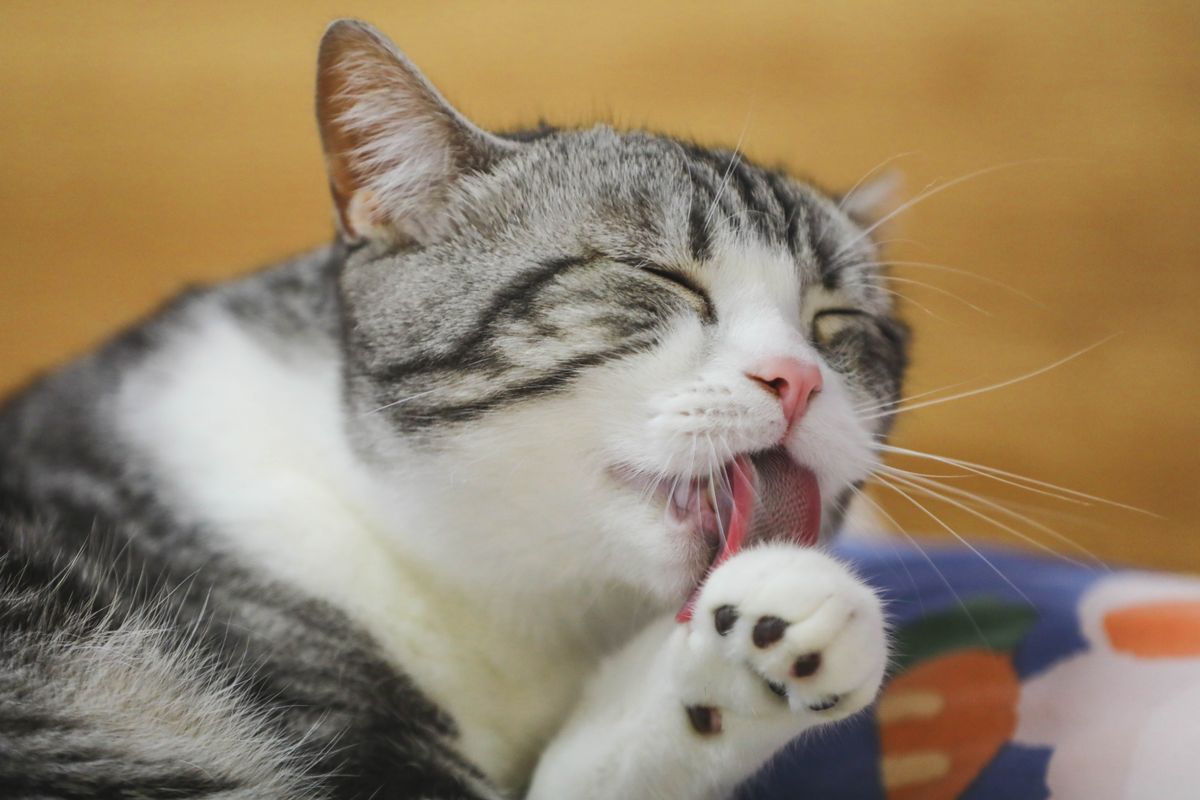
The short version: this is rarely an emergency, but it is not just a habit to ignore, and it is worth a vet visit rather than a guess. Note exactly where she licks, whether the skin underneath looks red or sore, and whether anything in her life has changed. Take that to your vet, who will usually check for fleas and allergies, rule out pain, and only call it stress-related once nothing medical is found.
What a senior cat overgrooming looks like
If you are wondering why your cat is licking her fur off, the first thing to know is that overgrooming often hides in plain sight, because cats groom so much anyway. Cornell puts it well: because cats groom frequently, owners usually don't notice a problem until they observe significant hair loss or skin lesions. So the sign is usually the result, not the act: a patch of fur that has gone thin, short and stubbly, or bald, most often on the belly, the inner legs, or the back near the tail.
VCA describes the same thing from the skin's side: alopecia or hair loss can result when cats over-groom and remove fur, and that overgrooming can take the form of excessive licking or the pulling out of tufts of hair. The tell that sets it apart from ordinary grooming is that it keeps coming back to the same area, and the hair there is broken off rather than shed, leaving cat bald patches from licking with skin that may look pink or irritated underneath.
The medical causes come first
Most owners get this backwards, assuming overgrooming is a nervous habit, when in an older cat it is more often physical. VCA is clear on the order of things, noting that the diagnosis begins by ruling out or treating possible underlying medical causes. Two physical drivers lead the list.
The first is an itch. Cornell lists the most common causes of feline skin disease as allergies to airborne particles, food, or flea and mosquito bites, and any of them makes a cat lick and chew. The signs of skin disease themselves include excessive scratching, licking, or chewing of the fur. Fleas are worth naming even on an indoor cat, because a cat with a flea allergy can be miserable from a single bite.
The second is pain. A cat will lick at what hurts, and Cornell notes that cats will lick when an area of their body is itchy or painful, and that if pain is the issue, the licking is focused on the painful area. A cat licking her belly bald, especially with straining or trips to the litter box, can be soothing a sore bladder, one of the signs of lower urinary tract disease. A cat working at one hip or knee may be easing arthritis. And because an overactive thyroid can leave the coat and skin poor, it is on the list too, which is one more reason a new habit deserves the bloodwork that catches hyperthyroidism.
Where she licks is a clue
Because the licking follows the problem, the map on her body helps narrow it down. Cornell says the pattern gives real information: compulsive licking at the tail head may indicate a flea infestation, while cats with pollen or food allergies may lick their backs, abdomens or other areas of the body. A cat focused on her lower belly and inner thighs points more toward the bladder or a skin allergy; a cat gnawing at one joint points toward pain there. It is not a diagnosis you can make at home, but it is exactly the kind of detail that helps your vet, so note it before the visit.
Is my senior cat overgrooming from stress?
Stress is real, and it does cause overgrooming, but it earns the name only after the physical causes are excluded. This is the condition called psychogenic alopecia, and VCA defines it carefully: the diagnosis of psychogenic alopecia as a compulsive disorder is reserved for those cases in which no underlying medical problem is evident. It often starts as a way of coping: as VCA explains, feline psychogenic alopecia may begin as a displacement behavior arising from situations of conflict, frustration or anxiety, and then settles into a habit.
For an older cat, the triggers are the quiet ones: a house move, a new pet, a change of routine, or the disorientation that can come with aging and cognitive change. Cornell frames the treatment the same conditional way, saying that if all medical problems have been ruled out, then we normally treat over grooming as the result of some form of stress in a cat's life. So cat overgrooming from stress is a real diagnosis, just the last one on the list rather than the first.
How your vet tells them apart
Sorting this out is detective work, and it is why the vet does not simply hand you a calming spray on day one. VCA describes the workup for a cat pulling her fur out as ruling causes out one by one: a dermatology work-up might include diagnostic tests on the blood and skin, as well as perhaps medication or diet trials to rule out food allergies, parasites, itchiness, or pain. Some of it takes time: VCA notes that a steroid trial and an 8-week or longer food trial (with a novel antigen or hydrolyzed protein diet) may often be recommended before considering the diagnosis to be purely behavioral. The overall goal, as Cornell sums it up, is simple even when the path is not: the solution to "fur mowing" is to identify the underlying cause and correct it.
How the causes compare
Use this to describe the pattern to your vet, not to self-diagnose, since the same bald patch can have more than one cause.
| Likely cause | Where she licks | Other signs | What helps |
|---|---|---|---|
| Fleas or allergy | Tail base, back, belly | Redness, scabs, itchiness | Flea control, vet allergy work-up |
| Pain (joint) | One hip, knee, or leg | Stiffness, slowing down | Treating the arthritis |
| Bladder pain | Lower belly, inner thighs | Straining, litter box trips | Vet check for urinary disease |
| Stress | Belly, legs, variable | Change at home, otherwise well | Enrichment, calm, sometimes medication |
What you can do at home
The most useful thing is also the least dramatic: watch, note, and take it to your vet rather than reaching first for a fix. Do not scold her, because the licking is a response to something wrong, not defiance, and punishment only adds stress. Keep her flea prevention current even if she never goes out. If your vet has ruled the medical causes out and stress is the verdict, then the home work matters: a steady routine, a quiet retreat, more play, and sometimes a calming product can all lower her arousal. For a genuinely anxious cat, Cornell notes that if your cat is seriously stressed, a form of temporary anti-anxiety drug therapy prescribed by your veterinarian may be warranted, which is worth asking about rather than struggling on alone.
Frequently asked questions
Why is my cat licking her fur off? Most often because something itches or hurts. Fleas and allergies are the usual itch, and a sore joint or bladder is the usual pain. In an older cat these medical causes are more likely than stress, so a cat licking her fur off is worth a vet visit to check the skin and rule out pain before it is treated as a habit.
Why is my cat licking her belly bald? The lower belly is a common spot for two reasons: a skin allergy, and bladder discomfort, which cats often soothe by licking underneath. A cat licking her belly bald, especially with straining or more litter box trips, should be checked for urinary tract disease as well as for allergies.
Can stress make a cat overgroom? Yes, but it is diagnosed last, not first. Stress-related overgrooming, called psychogenic alopecia, is confirmed only once fleas, allergies, and pain have been ruled out. If your cat's overgrooming lines up with a move, a new pet, or a change in routine, mention it, but expect your vet to check the physical causes first.
How do I stop my cat overgrooming? You stop it by finding the cause, not by covering it up. Flea control, an allergy work-up, and pain relief fix the medical cases; enrichment, routine, and sometimes anti-anxiety medication help the stress ones. There is no single way to stop cat overgrooming that skips the diagnosis, and a cone or a bitter spray without a diagnosis just hides the signal.
Is overgrooming an emergency? Not usually. It is a signal to book a vet visit soon, not to rush to an emergency clinic, unless the skin is raw, broken, and clearly infected, or she seems in real pain. Otherwise, note the pattern and get her seen at a regular appointment.
The bottom line
Read the map before you reach for the calming spray. Where she licks, what the skin looks like, and what has changed at home are the three things your vet will want, and gathering them is the most useful thing you can do. Biscuit grooms like the tidy old lady she is, evenly and without ever wearing a patch thin, so I read her licking as ordinary. If she ever started stripping the fur off one spot, I would be looking for a flea or a sore joint long before I decided she was anxious, because for a senior cat overgrooming is far more often a body in discomfort than a mind in distress, and the fix begins with finding which.
Sources
- Cornell Feline Health Center, Cats that Lick Too Much
- VCA Animal Hospitals, Compulsive Disorders in Cats
- Cornell Feline Health Center, Feline Skin Diseases