
Heart Disease in Cats: The Hidden Danger of HCM
Heart disease in cats usually means HCM, and it hides until it turns dangerous. Silent signs, the two emergencies, and the link to thyroid and blood pressure.
Heart disease in cats frightens me more than most of the illnesses I write about, and the reason is that it works in the dark. A cat can have a seriously affected heart and look, right up until a bad day, entirely well. The common form has a clumsy name, hypertrophic cardiomyopathy, or HCM, and Cornell calls it plainly the most common heart disease of cats. It tends to announce itself in one of two frightening ways, and knowing them, along with the quieter clues that can come first, is the difference between a scramble and a plan.
This explains what HCM is, why it stays hidden, the emergencies to watch for, and how it ties to two diseases you may already be managing. What is happening in your own cat's heart is a question only your vet, and usually a scan, can answer.
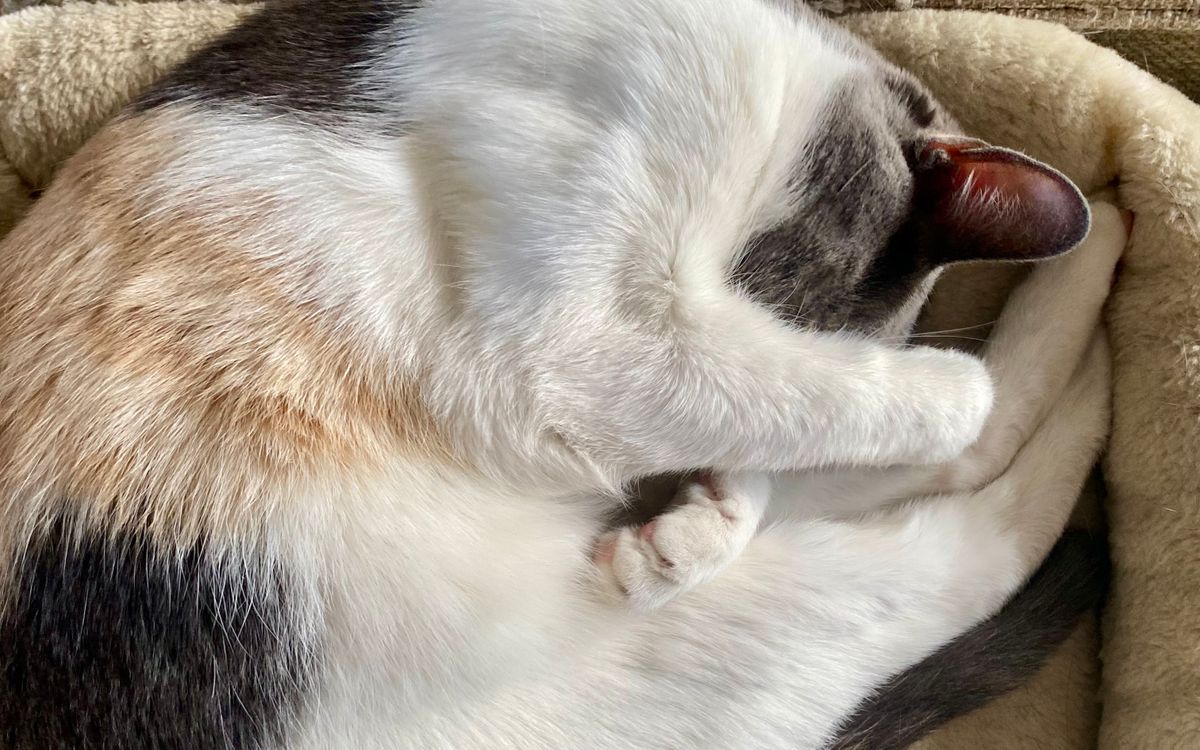
What is HCM, the most common heart disease?
HCM is a disease of the heart muscle itself. Cornell describes it as a condition that causes the muscular walls of a cat's heart to thicken. As the walls of the main pumping chamber grow thicker, the chamber holds less blood and pumps less efficiently, and blood begins to back up behind it. VCA agrees on its place at the top of the list, noting that the most common type of heart disease in cats is hypertrophic cardiomyopathy (HCM). Some cats inherit it, and it turns up more in certain breeds, but plenty of ordinary older cats develop it too.
Why heart disease in cats so often hides
The hardest thing about HCM is how quiet it can be. Cornell is direct: many cats with HCM do not appear to be ill. In fact, a good number never become so. Cats that do not display any clinical signs are often able to survive for years with only mildly compromised heart function. Many cats, in other words, carry it quietly for years. The danger is that when HCM does cause trouble, it can do so with very little warning, and Cornell notes that although relatively rare, cats with HCM are at risk for sudden death. The cat simply has nothing to show until the disease crosses a line.
The two heart emergencies to know
When HCM finally shows itself, it usually does so in one of two ways, and both are same-day emergencies.
The first is heart failure, where fluid backs up into the lungs. VCA is clear about what to watch for: the most common sign of heart failure in cats is difficulty breathing. This sign may develop rapidly. Fast, labored, or open-mouthed breathing in a resting cat is never normal and needs emergency care now. A raised resting breathing rate, counted while she sleeps, is one of the earliest clues, and worth learning to check if your cat has a known heart murmur. Not every breathing change traces to the heart, though: a lung problem such as feline asthma can look similar, which is why a vet often checks the heart and the lungs together. A cough, in particular, points at the airway rather than the heart in cats, the opposite of what a dog owner might expect.
The second is a blood clot. Cornell lists the formation of blood clots in the heart among HCM's complications, and when one breaks loose it can lodge in the vessels to the back legs. VCA describes the result starkly: the most common clinical signs of aortic thromboembolism are sudden paralysis and pain, usually in the rear legs. The cat may vocalize from pain and may act anxious, and the nailbeds and foot pads may be pale or bluish. A cat who suddenly cannot use her back legs and is crying is in a true emergency and needs to be seen immediately. This is one of several causes of weak back legs in a senior cat, and the only one that counts hours.
How thyroid and blood pressure strain the heart
This is where HCM connects to the rest of an older cat's health, and where you may have more warning than you think. Cornell notes that similar heart thickening is also caused by other common conditions, including high blood pressure and hyperthyroidism. VCA puts the same point in terms of cause: older cats with hyperthyroidism and/or high blood pressure can develop secondary HCM due to the increased workload that the heart must endure. If your cat has an overactive thyroid or high blood pressure, her heart is part of what treating those diseases protects, which is one more reason the two are worth catching and controlling.
How heart disease is found and managed
You cannot diagnose a thickened heart from the outside, and a normal-sounding chest does not rule it out. Your vet may pick up a murmur or an abnormal rhythm on a routine exam, but the definitive test is a scan. Cornell states it simply: HCM is diagnosed by echocardiography, an ultrasound of the heart that shows the thickened walls directly. There is no cure, but there is management. Cornell notes that although HCM has no known cure, a specialized care plan can help manage clinical signs, which can include medication to ease the heart's work, to control heart failure, and to lower the risk of clots. Keeping her days calm and comfortable helps too, since stress only adds to the work a strained heart already faces. Many cats live well for a long time on it.
When to see the vet
Treat any breathing trouble as an emergency: fast or labored breathing at rest, open-mouthed breathing, or a resting breath rate that has climbed. Treat sudden weakness or paralysis in the back legs, especially with crying and cold or pale paws, as an emergency too, and go at once. Short of a crisis, if your vet has ever mentioned a heart murmur, ask whether an echocardiogram is worthwhile, and if your cat has a thyroid or blood pressure problem, keep those on a tight rein for her heart's sake.
Biscuit's heart has stayed sound so far, and at her check-ups I have come to appreciate the quiet minute when the vet listens to her chest, the same minute I once thought of as a formality. Heart disease in cats does its worst work unseen, so the small routine checks, and knowing the two emergencies on sight, are most of what we can do. The rest is the good luck of an ordinary evening, a warm cat breathing easy in the crook of my arm.
Sources
- Cornell Feline Health Center, Hypertrophic Cardiomyopathy
- VCA Animal Hospitals, Congestive Heart Failure in Cats and Aortic Thromboembolism in Cats