
Senior Cat Breathing Fast or Hard: When It's an Emergency
A senior cat breathing fast, hard, or with an open mouth is often urgent. How to count her resting breaths at home, the emergency signs, and what causes it.
A senior cat breathing fast is one of the few changes you should never wait on. Cats are not built to breathe hard. Unlike a dog, a healthy cat almost never pants, so fast, heavy, or open-mouthed breathing in a cat is a warning sign in a way it simply is not in dogs. In an older cat it deserves real attention, because the things that cause it, a struggling heart most of all, tend to be serious. There is a simple, powerful thing you can do at home to catch trouble early, and the signs, like a cat's open-mouth breathing, that are an emergency you must not wait on.
This covers how to check your cat's breathing at home, what a cat breathing heavy means and when to worry, which signs are a same-day emergency, and what tends to be behind it in a senior cat. It is not a diagnosis: a cat who is breathing abnormally needs a vet, and sometimes needs one right now.
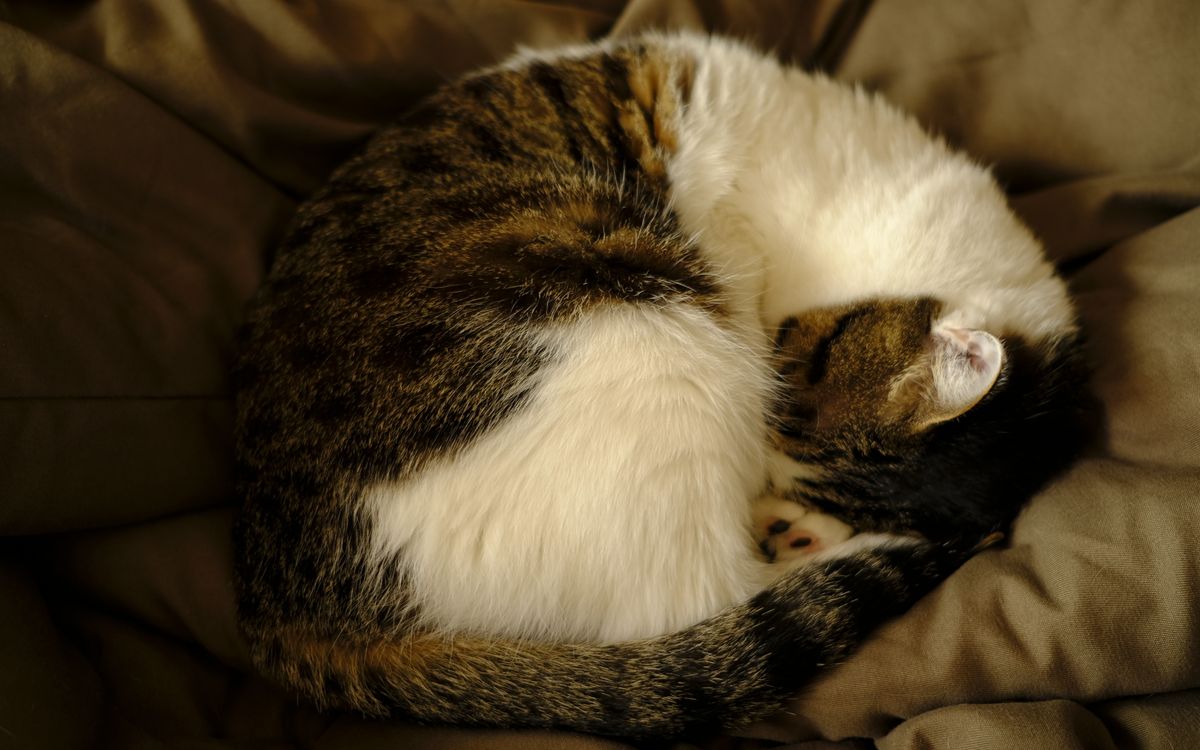
How to check your cat's breathing at home
The single most useful thing you can learn is your cat's resting breathing rate, because a rise in it is often the earliest sign of trouble. Count while she is asleep or lying calmly, not after play. VCA explains the method: count one breath when the chest has moved in and out once, count for thirty seconds, and then multiply the number of breaths you counted by 2 to get the number of breaths in 60 seconds (1 minute). What you are looking for is a steady, low number. VCA puts the normal range clearly: a normal breathing rate while resting calmly or sleeping is between 15 and 30 breaths per minute, and Resting/sleeping breathing rates that are consistently greater than 30 breaths per minute are increased and considered abnormal. This matters because, as VCA notes, an increase in your pet's breathing rate while resting quietly or sleeping is an important early clue (clinical sign) that your pet may be developing heart failure. If you count a resting rate over 30 more than once, VCA's advice is plain: contact your veterinarian as soon as possible.
The signs that mean go now
Some breathing is not a wait-and-count situation. Treat any of these as a same-day emergency and get to a vet or emergency clinic straight away:
- Open-mouth breathing or panting. A cat panting like a dog is a cat in distress. VCA lists it among the signs of a cat struggling to breathe, noting that most cats with asthma show coughing, difficulty breathing, open-mouth panting, and other signs of respiratory distress.
- Labored breathing. Sides heaving with each breath, an extended neck and head held low, or obvious effort to move air.
- Blue, gray, or pale gums. A sign she is not getting enough oxygen.
- Fast, shallow breathing at rest that does not settle, especially with any of the above.
None of these are things to sleep on. A cat in real breathing trouble can go downhill fast.
What causes breathing trouble in a senior cat?
The reason abnormal breathing worries a vet so much in an older cat is what tends to be behind it. The big one is the heart. VCA notes that the most common sign of heart failure in cats is difficulty breathing, and that this sign may develop rapidly, which is why a raised resting breath rate is such a useful early warning for a cat with heart disease. Feline asthma is another common cause, bringing the cough and wheeze VCA describes. Fluid or a mass in the chest can crowd the lungs, which is one way cancer such as lymphoma shows itself. And high blood pressure, pain, and anemia can all quicken a cat's breathing too. Because the list is serious and the causes are treatable when caught early, this is a symptom to act on rather than watch.
When to see the vet
Make it an emergency, right now, for open-mouth breathing, labored breathing, or pale or bluish gums. Call your vet the same day if your cat's resting breathing rate is consistently over 30, or if she is breathing faster or harder than usual without an obvious reason. Between visits, a resting breath count you take now and then, jotted down, is one of the most useful things you can hand a vet, and it costs nothing but a quiet minute.
Biscuit sleeps in a tight curl on the end of the sofa most evenings, and I have caught myself, more than once, watching the slow rise and fall of her side and counting without quite meaning to. It has become a small reassurance, that steady, unhurried number. If it ever changed, I would want to be the one who noticed first. A senior cat breathing fast is the one sign where noticing first can be the whole difference.
Sources
- VCA Animal Hospitals, Home Breathing Rate Evaluation
- VCA Animal Hospitals, Congestive Heart Failure in Cats
- VCA Animal Hospitals, Asthma and Bronchitis in Cats