
Senior Cat Checkups: What Regular Vet Visits Catch Early
Regular senior cat checkups catch kidney disease, diabetes, and high blood pressure early, often before your cat looks sick. What the vet tests, and why.
The single most useful thing I do for Biscuit is also the most boring: I take her for regular checkups, even when she seems perfectly fine. Her kidney disease was found that way, on a routine blood panel, months before she looked unwell. That is the quiet case for senior cat checkups. If you are not sure your cat counts as a senior yet, the cat age calculator translates her age into human years. Cats are built to hide sickness, and most of the serious diseases of old age are catchable and manageable if they are found early, which is much of why cats now live longer than they used to, so the visit that feels unnecessary is often the one doing the most good.
This explains why older cats need regular checkups, what the vet actually looks at, and which diseases the tests are built to catch, with any unfamiliar words defined in the senior cat health glossary. It is an argument for the appointment, not a substitute for it. Your vet is the one who reads the results.
Why senior cats need more than a yearly glance
The reason routine visits matter so much is the same reason old-age disease is so easy to miss at home. VCA puts it plainly: cats are very good at masking illness and disease, and Cornell agrees that cats are experts at hiding illness, and elderly cats are no exception. A cat can lose a third of her kidney function, or run a fast thyroid for months, and still purr on your lap as though nothing were wrong. The prevalence figures for these diseases are the argument for testing a cat who looks perfectly well. VCA makes the case for testing directly: wellness testing is particularly important for senior and geriatric cats, since there is a greater chance that an older cat will develop disease or have an ongoing but stable condition that needs to be monitored. Of everything that people are told to change once a cat turns ten, this is the one that genuinely applies to all of them. A full wellness exam at least once a year is the baseline, and it is also when her vaccinations are kept on the right schedule; for a senior cat many vets suggest coming more often than that, which is a good deal easier when getting her there is not a battle.
There is now a direct measurement of what those visits turn up. A 2026 study in the Journal of Veterinary Internal Medicine looked at 549 cats aged eight and older who came to two UK clinics for routine screening rather than for a complaint, with a median age of 13.5. Hyperthyroidism was diagnosed in 19.2% of the cats tested for it, kidney disease already visible in the blood in 11.4%, and high blood pressure in 7.1%. These are the cats an owner would describe as fine. The authors' own summary is that Routine medical health screening in older cats is useful in detecting diseases, many of which would benefit from prompt veterinary intervention. The full set of figures, and what they do and do not mean for one cat, is in senior cat health statistics.
What the vet checks in the room
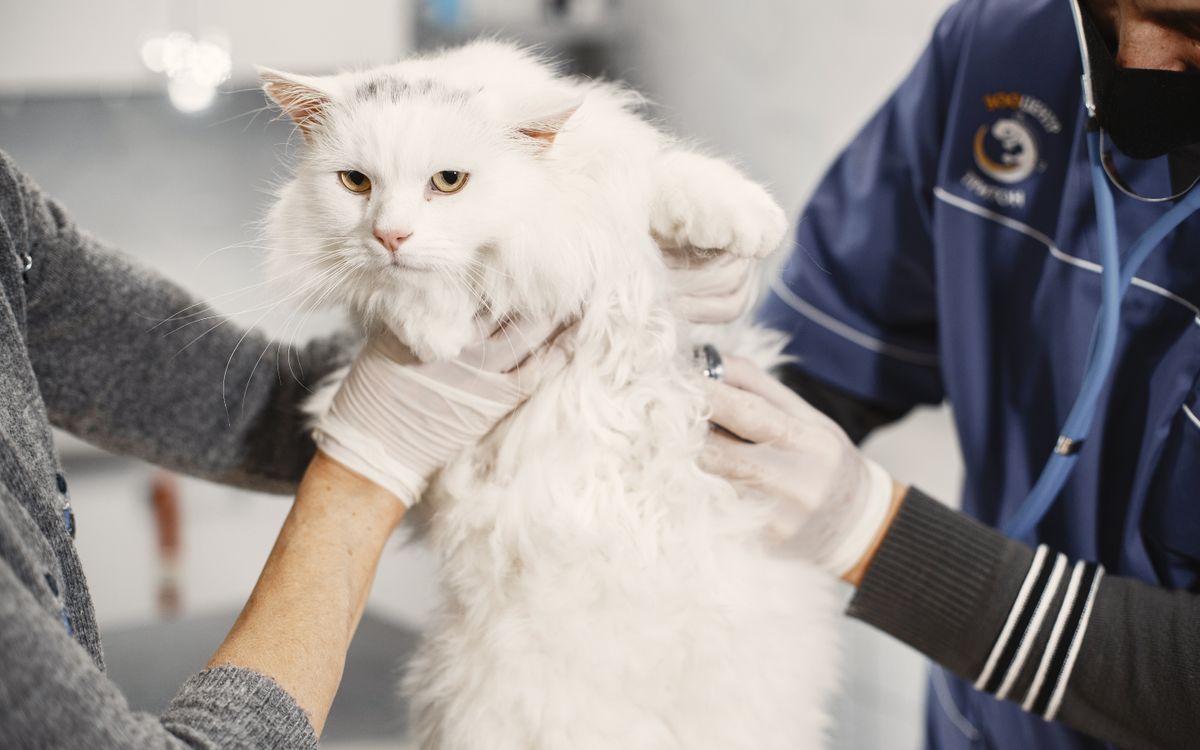
A good deal happens before any test is run. Cornell describes the exam this way: the vet will gather a complete medical and behavioral history, perform a thorough physical examination in order to evaluate every organ system, check your cat's weight and body condition. That quiet few minutes covers a lot: listening to the heart for the murmur that can hint at heart disease, feeling the neck for the enlarged thyroid behind hyperthyroidism, looking in the mouth for the dental disease that hides below the gumline, and pressing along joints and spine for the stiffness of arthritis. Weight is quietly one of the most telling numbers of all, which is why it is checked and recorded every time.
The five senior wellness tests
Beyond the exam, a set of tests looks where hands and ears cannot. VCA lists five main categories of wellness testing for senior cats: complete blood count (CBC), biochemistry profile, urinalysis, thyroid hormone testing, and blood pressure assessment. Each one has a job:
- Biochemistry profile and urinalysis read the kidneys and more, and together they are how chronic kidney disease is caught and staged, often long before a cat shows it. The same bloodwork flags the high blood sugar of diabetes.
- Thyroid hormone testing measures the level that rises in hyperthyroidism, the common and very treatable cause of a cat who is losing weight while eating well.
- Blood pressure assessment catches the silent high blood pressure that rides with kidney and thyroid disease and can steal a cat's sight before anyone notices.
- A complete blood count rounds out the picture, screening for anemia, infection, and other changes in the blood.
Why one year's numbers only tell half the story
A single bloodwork panel gives you a value. What actually catches disease early is the second one, and the third. Cornell's description of the exam does not stop at checking your cat's weight and body condition, it goes on to compare them to previous evaluations, and the same logic runs through the blood and urine values behind that exam. A creatinine or SDMA reading that sits inside the normal range this year but has crept up from last year's is often the earliest real signal a vet gets, well before any single number crosses into abnormal. It is part of why the IRIS system used to stage chronic kidney disease leans on repeat testing in a stable cat rather than one blood draw read alone. The boring part, going back year after year while she still seems fine, is what makes that comparison possible at all.
VCA notes your vet may recommend more frequent testing depending on your cat's age or specific health concerns. A cat already living with a chronic condition, or one well into her teens, is often worth checking twice a year rather than once, so the trend line has enough points on it to be worth reading. That twice-a-year rhythm is also what the longest-running study of aging pet cats used. In the Cat Prospective Ageing and Welfare Study, published in Frontiers in Veterinary Science, Cats were enrolled at middle age and attended a veterinary examination every 6 months for up to seven years, and over that time Most cats (96%) developed at least one abnormality on veterinary examination. Almost none of them stayed clear of everything, which is a fair description of what the repeat visits are for.
What catching it early actually buys you
None of this is testing for its own sake. VCA sums up the payoff: if a disease can be detected early, before a cat shows signs of illness, then steps can often be taken to manage or correct the problem before permanent damage occurs, and Cornell adds that most diseases can be managed more successfully when detected and treated early in their course. Kidney disease found early means years of good living rather than a crisis. A thyroid caught before it damages the heart, a blood pressure controlled before it takes the eyes, cognitive changes named and managed instead of mistaken for simple old age: early is where nearly all the good outcomes live.
What you can do between visits
You see your cat every day, which makes you the first and best monitor she has. Between checkups, keep a loose eye on the things that shift when something is wrong: her weight and how she feels over the ribs and spine, how much she is drinking, whether her appetite has changed or she has stopped eating, whether her breath has turned, what the litter box shows, how she is breathing at rest, and any new lumps under her fur. Note changes as they happen rather than trusting memory, and bring that account to the visit. A short list of what you have noticed is often what points the vet at the right test.
Biscuit is sixteen, and the reason I still have her curled beside me is not any one heroic treatment. It is a long string of ordinary appointments, the boring blood draws and the little cuff on her leg, that caught what was happening while there was still time to do something about it. For an old cat, the checkup she does not seem to need is usually the one worth keeping. Regular senior cat checkups are the quiet habit that catches the disease before it looks like one.
Sources
- Cornell Feline Health Center, The Special Needs of the Senior Cat
- VCA Animal Hospitals, Wellness Testing for Senior Cats
- Journal of Veterinary Internal Medicine, 2026, Prevalence of disease in 549 older cats undergoing health screening at two United Kingdom-based veterinary clinics (PubMed)
- Frontiers in Veterinary Science, 2026, Patterns of morbidity, multimorbidity, and mortality in aging cats: findings from seven years of the Cat Prospective Ageing and Welfare Study (full text)