
How to Give a Cat a Pill: A Calm Guide for Senior Cats
How to give a cat a pill without turning it into a battle: hide it in food, give it by hand step by step, and the vet trick that ends the fight.
Learning how to give a cat a pill is a rite of passage: sooner or later, most of us with an older cat become amateur pharmacists. The common diseases of old age, an overactive thyroid, kidney disease, high blood pressure, arthritis, are managed with medication a cat needs every day, often for the rest of her life. And cats, as a rule, would rather you didn't. A cat who won't take medication is one of the quiet trials of senior cat care, and it matters more than it seems, because a medicine she spits out is a disease that goes untreated. There are ways to make it easier: knowing how to medicate a senior cat, from the gentlest approach to the one that ends the struggle for good.
None of this replaces your vet's instructions. Always ask whether a given pill can be given with food or crushed, since some must not be, and check before changing how you give any medication.
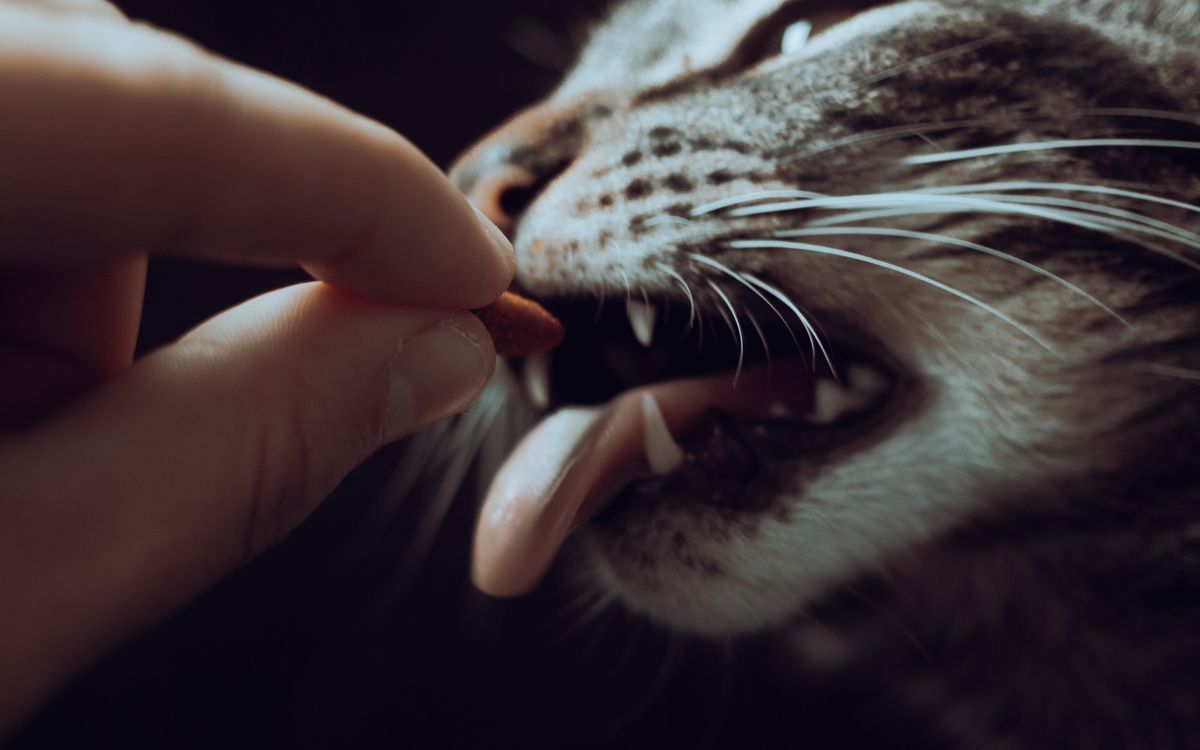
Hiding a pill in food
The easiest pill is the one your cat never notices. VCA suggests you hide it in a small amount of wet cat food, tuna, or a soft treat that can be molded around the pill, such as a commercial pill pocket. A little grease helps it go down unremarked: lubricate the pill with a bit of butter, gravy from canned food, or a piece of a soft treat so it is easier to swallow. Offer it as a first, hungry-moment treat rather than burying it in a full bowl, so you can see it disappear. Many cats, though, are cleverer than this, eating the treat and leaving the pill neatly behind. If yours is one of them, you have two better options.
Giving a pill by hand, step by step
Done calmly, hand-pilling takes seconds, and it gets easier with practice. VCA's method is worth following closely:
- Steady her head. Tilt your cat's head back, pointing her nose upwards. This naturally drops her lower jaw open a little.
- Place it far back. Quickly place the pill as far back over the tongue as possible, then close your cat's mouth and hold it closed while you return her head to a normal position. A pill dropped at the front of the mouth comes straight back out; over the back of the tongue, it goes down.
- Encourage the swallow. Gently rub your cat's nose or throat or blow lightly on her nose to stimulate swallowing. Watch for a lick of the lips, the tell that it went down.
- Follow with a little liquid. Use a syringe to squirt a bit of water into your cat's mouth to help them swallow, or offer something soft and tasty like tuna juice. This washes the pill down so it does not sit in the throat.
For a frail or arthritic old cat, be gentle with the handling: no scruffing, no pinning. If she struggles hard, wrapping her snugly in a towel with just her head out keeps everyone calmer and safer.
When she wins: ask about another form
If pilling has become a daily fight that is fraying both of you, do not just soldier on, because there is often a better way that owners never think to ask for. VCA points to it directly: veterinary pharmacies can prepare many medications into liquid or treat formulas with appealing flavors such as tuna, chicken, or salmon. Better still for a cat who fights anything going in her mouth, some medications can even be made into a gel that can be rubbed onto the ear flap and absorbed through the skin. Thyroid medication in particular is often available this way. Not every drug can be compounded or absorbed through the skin, so this is a conversation for your vet, but for the right medication it turns a twice-daily wrestling match into a five-second smear on an ear.
Making it a kinder routine
A cat who dreads the pill dreads the hands that bring it, so it helps to keep the mood low and the reward high: a favorite treat straight after, every time, so the experience ends on something good. Keep her other days steady and comfortable, since a cat who is otherwise content tolerates the daily fuss better, which is one small piece of making the whole home gentle on an older cat. And bring any real struggle to your next check-up: your vet can often simplify a regimen, switch a form, or show you a technique in a minute that a video never quite teaches.
Biscuit takes a pill most mornings now, folded into a pea-sized lump of something she considers worth it. On the days she sees through the trick, I have the ear gel her vet set up as a backup, and the fight I used to dread simply does not happen anymore. The medicine was never what I struggled with. Getting it into her was, and that is the thing worth solving. Once you learn how to give a cat a pill calmly, the medicine stops being the hard part of her care.
Sources
- VCA Animal Hospitals, Giving Pills to Cats