
Feeding a Senior Cat: What Really Changes with Age
Older cats often need more protein and calories, not less, plus real help staying hydrated. A gentle, sourced guide to feeding a senior cat well.
When Biscuit turned into a proper old lady of a cat, my first instinct was to reach for a bag labeled "senior" and assume it meant less: less food, fewer calories, something gentler on an aging body. For a lot of older cats, that instinct is worth questioning, and it turns out the word "senior" on a bag carries no regulated meaning at all. Feeding a senior cat well turns out to be less about cutting back and more about keeping muscle on her frame, water in her body, and a close eye on the scale. The needs of an aging cat often move in the opposite direction from what the word "light" suggests. If you want to see what the senior bags themselves promise, I read the fine print on four of them.
This is general guidance rather than a diet plan for your particular cat. If she has a diagnosed condition like kidney disease or diabetes, her food is part of her treatment and belongs in your vet's hands. But the broad picture of how a cat's needs shift with age is worth understanding, because it shapes the everyday choices you do get to make.
Do senior cats need less food, or more?
For much of adult life the answer is less: a cat's energy needs drift down through her middle years, which is why so many indoor cats put on weight in early adulthood. That trend reverses in old age. VCA notes that a cat's energy requirements start to increase around 11 years of age, and that some older senior cats may need an increase in their caloric and protein intake to sustain a normal physique as their body condition and weight naturally decline with advanced age. A very old cat quietly losing weight on the food that once kept her round is a common picture, and it is often a reason to feed more, or richer, rather than less. It is also a reason to have her checked, since conditions like hyperthyroidism cause weight loss even when the appetite looks fine.
Why protein matters more as a cat ages
Cats are built around meat. Cornell puts it plainly: cats are obligate carnivores, which means that they rely on nutrients found only in animal products. Age does not soften that requirement so much as sharpen it. Older cats tend to lose muscle, and good protein is the main thing that defends against it. VCA describes dietary protein as a critical nutrient for maintaining good physical health in the face of aging. Unless your vet has restricted her protein for a specific medical reason, an aging cat generally needs plenty of high-quality animal protein, not a thinned-down "senior" formula chosen on the assumption that less is kinder.
Getting enough water into a senior cat
Cats are famously poor drinkers, and age makes it worse. VCA explains that aging, however, interferes with a cat's sensitivity to thirst, which is already low in cats and predisposes them to dehydration. Food is where you can quietly make up the difference, because the gap between wet and dry is enormous. Cornell puts canned food at a moisture content of at least 75 percent, making it a good dietary source of water, against dry food, which contains between six and 10 percent water. Leaning on canned food is one of the simplest ways to lift her intake, and as VCA notes, feeding more canned food will also increase water intake. Fresh water still belongs everywhere: Cornell's baseline is that cats should have access to clean, fresh water at all times, which is easier if you keep bowls on every floor she uses. Hydration matters most of all for a cat living with kidney disease. If you want a rough daily target rather than a guess, our water intake calculator gives you one to check her against.
Watching a senior cat's weight, both ways
Weight is the single most useful thing you can track at home, and old age can push it in either direction. On one side, Cornell reminds us that obesity is the most common nutrition-related problem in cats, and a heavy cat runs a higher risk of diabetes, which makes safe, gradual weight loss worth the effort. On the other, slow weight loss in a thin old cat is easy to overlook until it is well along. VCA's advice is to schedule periodic weigh-ins at home or at your veterinarian's clinic to monitor any weight gain or loss. A monthly weight, plus a hand run along her spine and ribs, will usually tell you which way she is heading long before it shows to the eye.
Let mealtimes tell you something
How you serve food can double as a health check. VCA suggests that by shifting from food left out all the time to delivering your cat's daily nutrients in two or more meals, you can quickly see if your cat is eating all their food. A bowl topped up all day hides a fading appetite for days at a stretch, where two set meals surface it within one. And appetite is worth watching closely, because as VCA puts it, a decreased or absent appetite can signal an underlying medical problem. A senior cat who suddenly will not eat is rarely just being difficult, and one who approaches her food, mouths at it, then backs away may have a sore mouth rather than a picky palate.
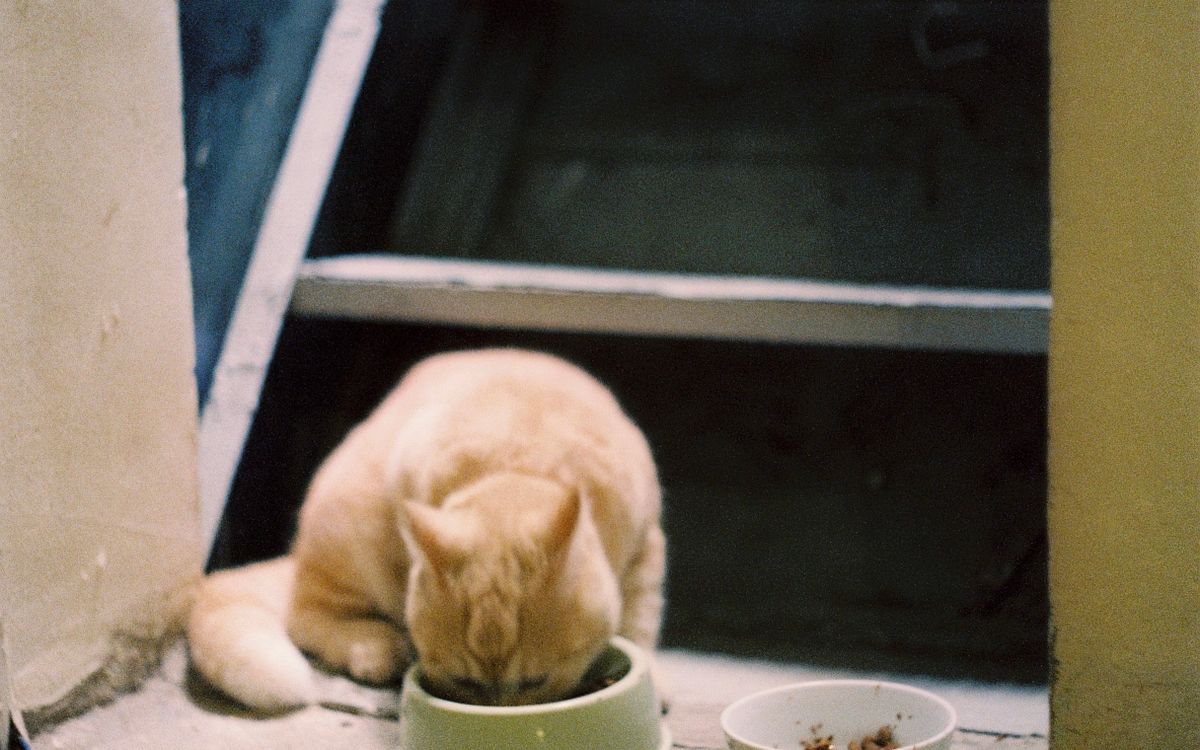
Biscuit takes her two small meals at the same two times each day, off a saucer low enough that she does not have to stoop for it. Because of that, I know within a mealtime when something is off. Feeding a senior cat well is less about a bag marked "senior" than about a few steady things. That is most of what it comes down to: enough good protein to hold her together, enough water to keep her comfortable, and a routine steady enough that the day she goes quiet over her bowl, you notice by lunch.
Sources
- Cornell Feline Health Center, Feeding Your Cat
- VCA Animal Hospitals, Feeding Mature, Senior, and Geriatric Cats