
How to Give Your Cat Subcutaneous Fluids at Home
How to give your cat subcutaneous fluids at home: why kidney cats need them, warming the bag, tenting the skin, and why the lump afterward is normal.
Learning how to give your cat subcutaneous fluids at home is one of those things that sounds far more frightening than it turns out to be. Giving sub-q fluids to a cat at home becomes routine faster than most owners expect. For a cat with kidney disease, a bag of fluids run under the skin a few times a week can be the single kindest thing you do for her, and most owners who dread the first attempt are, within two weeks, doing it half-asleep before breakfast. The walk-through below sits alongside the lesson your vet gives you rather than replacing it.
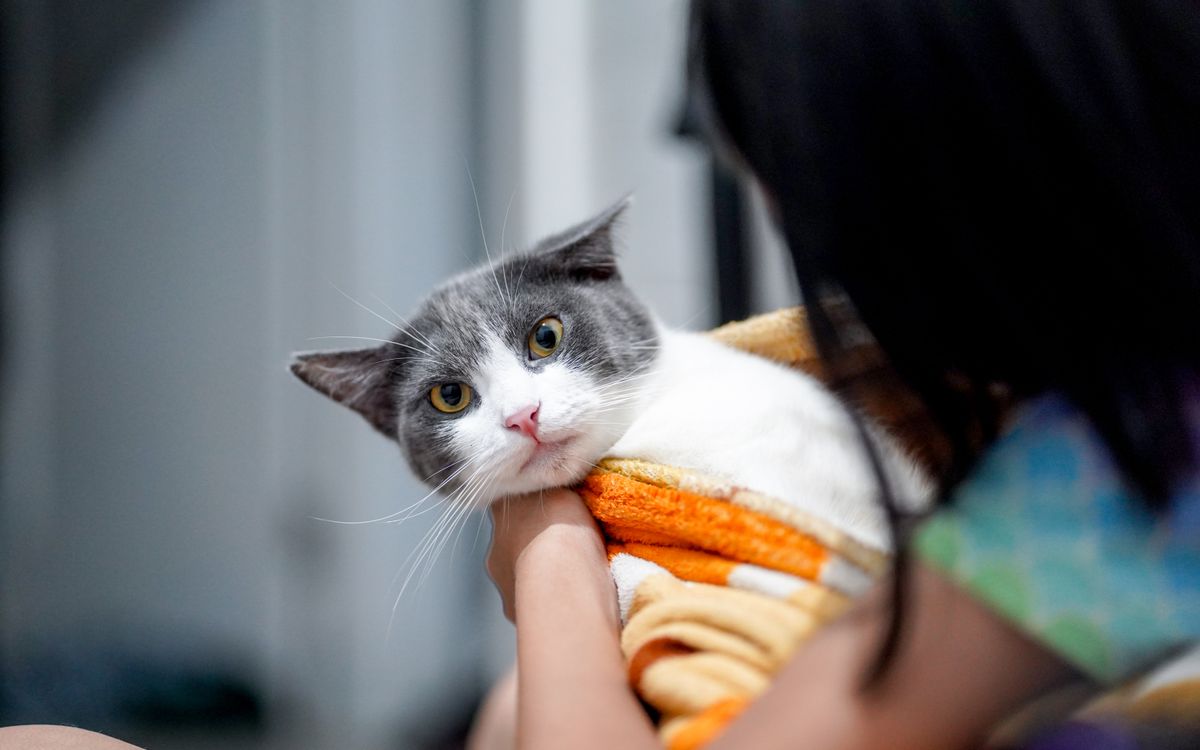
Before anything else: subcutaneous fluids are a treatment your vet prescribes, supplies, and shows you in person. Never start on your own, and always follow the exact amount and frequency your vet gives you for your cat. This guide is a memory aid for what they teach you, not a substitute for it.
The short version: fluids under the skin are most often for kidney cats. Your vet sets the amount and shows you how. Warm the bag to body temperature, settle her on your lap, tent a fold of skin over the shoulders or hip, slide the needle in level, and let it run. The soft lump that forms is normal and soaks away in a few hours.
Why does giving a cat fluids under the skin help?
Because her kidneys are letting water go faster than she can drink it back. VCA is clear about the usual reason: home fluid therapy is most commonly recommended for cats with chronic kidney disease. A cat with chronic kidney disease makes more urine than her body can spare, and if she cannot drink enough to keep up, she slides into dehydration, which makes the kidneys work harder and her feel worse. Fluids given under the skin top up the difference on the days her bowl cannot, and for many cats they are the thing that keeps them comfortable and eating. Put simply, subcutaneous fluids for cats with kidney disease replace water that failing kidneys let slip away.
This starts at the vet, not online
The most important step happens before you ever hold a needle. VCA puts it plainly: a member of your veterinary healthcare team will go through the steps with you in person. Your vet decides whether she needs fluids at all, prescribes the type and the amount, supplies the bag and needles, and shows you how on your own cat, where they can correct your grip and answer the questions a page cannot. Treat everything below as a reminder of that lesson. The amount and how often are hers to set, not yours to guess, and this piece will not give you a number for exactly that reason.
Getting set up: warming subcutaneous fluids for cats
Cold fluid under the skin is uncomfortable and makes the whole thing harder, so warmth matters more than people expect. The fluids should be given at about body temperature, and the simple way there is a water bath: VCA advises you warm the fluids in a water bath to increase comfort, then check it is not too hot by placing your wrist on the bag, the same test as a baby's bottle. Store the bag out of direct sunlight, but do not refrigerate it. While it warms, get her settled: a full lap, a favorite blanket, and a treat waiting are worth more than any restraint.
The steps: tent, insert, let it run
With warm fluids and a calm cat, the procedure itself is quick. Settle her upright on your lap so you can reach her back and shoulders, then make a tent of her loose skin. VCA describes it exactly: pinch and lift a roll of loose skin, creating a tent-like shape, over the shoulder blades or a hip. Rotate where you go each time so no one spot gets sore.
Slide the needle into the base of that tent in one smooth motion, keeping the needle horizontal and pointing toward the cat's head, then open the line and let the fluid flow until you reach the amount your vet gave you. Most cats sit better than their owners expect, especially with a treat and a calm voice going. When it is done, pinch the skin as you draw the needle out to stop any dribble, and make a fuss of her.
Afterward: cat sub-q fluids leave a lump under the skin, and that is normal
The first time, the soft swelling that appears can be alarming if no one has warned you. It should not be. As VCA reassures, a lump will form under the skin. Do not be alarmed; this pocket of fluid will be absorbed over the next few hours. It may even slide down toward her elbow or belly with gravity, which is also fine. By the next session it will be long gone.
When to call your vet
Follow the specific instructions your vet gives you, and call them rather than pressing on if something does not seem right: fluid that will not go in, a spot that stays swollen, red, or sore across sessions, or a cat who seems unwell, breathes harder, or goes off her food after a treatment. None of this is common, but your vet would always rather hear from you than have you worry alone, and they can adjust the amount or the routine as her needs change. Keep every recheck appointment too, since the fluids are one part of managing her kidneys and the bloodwork tells them whether the whole plan is working.
Frequently asked questions
Does giving subcutaneous fluids hurt my cat? Usually very little. The needle is fine and quick, and warmed fluids go in far more comfortably than cold ones. Most cats tolerate it well, especially with a treat and a calm routine, and many barely react once it becomes familiar.
How much subcutaneous fluid should I give my cat? Only the amount your vet prescribes for her, which is why this guide does not give a number. The right volume depends on her size and her kidney values, and it can change over time, so follow your vet's instructions exactly and check with them before adjusting anything.
Do I have to warm the fluids? Yes, it makes a real difference. VCA recommends giving fluids at about body temperature and warming the bag in a water bath, tested on your wrist. Do not microwave the bag, and do not refrigerate it.
Is the lump under the skin normal? Yes. VCA explains that a lump will form under the skin and is absorbed over a few hours. It is simply the pocket of fluid waiting to be taken up by her body, and it is expected every time.
What if I just cannot do it? That is more common than you would think, and it is not a failure. Ask your vet about a technician giving the fluids, a different setup like a syringe method, or a nurse walking you through it again. There is usually a way to make it manageable.
The bottom line
Home fluids look like the hardest part of caring for a kidney cat, and they turn out to be one of the most doable, once your vet has shown you and the routine settles in. The first time I gave Biscuit her fluids my hands shook so badly the vet nurse quietly did most of it. Now it is ten minutes on a Tuesday and a Friday, a warm bag, her on my lap under the good blanket, and a treat she has come to expect, and it is one of the reasons a sixteen-year-old with tired kidneys is asleep beside me as I write this. Learning how to give your cat subcutaneous fluids is not the ordeal it looks like from the outside. It is just another quiet thing you learn to do for her, the way you learn to slip her a pill.
Sources
- VCA Animal Hospitals, Subcutaneous Fluid Administration in Cats