
How to Get a Senior Cat to Drink More Water
How to get a senior cat to drink more water: the wet-food lever, tricks that tempt her, how much she needs, and the dehydration signs worth watching.
Knowing how to get a senior cat to drink more water is mostly a matter of making it easier and more tempting, and of leaning on her food to do the heavy lifting. It matters more for a senior than it did when she was young, because a cat's thirst drive is low to begin with and fades further with age, and because the illnesses of old age, kidney disease most of all, turn steady hydration from a nicety into part of her care. The best ways to increase cat water intake are small, cheap, and mostly things you can do this week.
This is practical guidance, not a substitute for your vet, who should weigh in if your cat has a diagnosed condition or has suddenly stopped drinking.
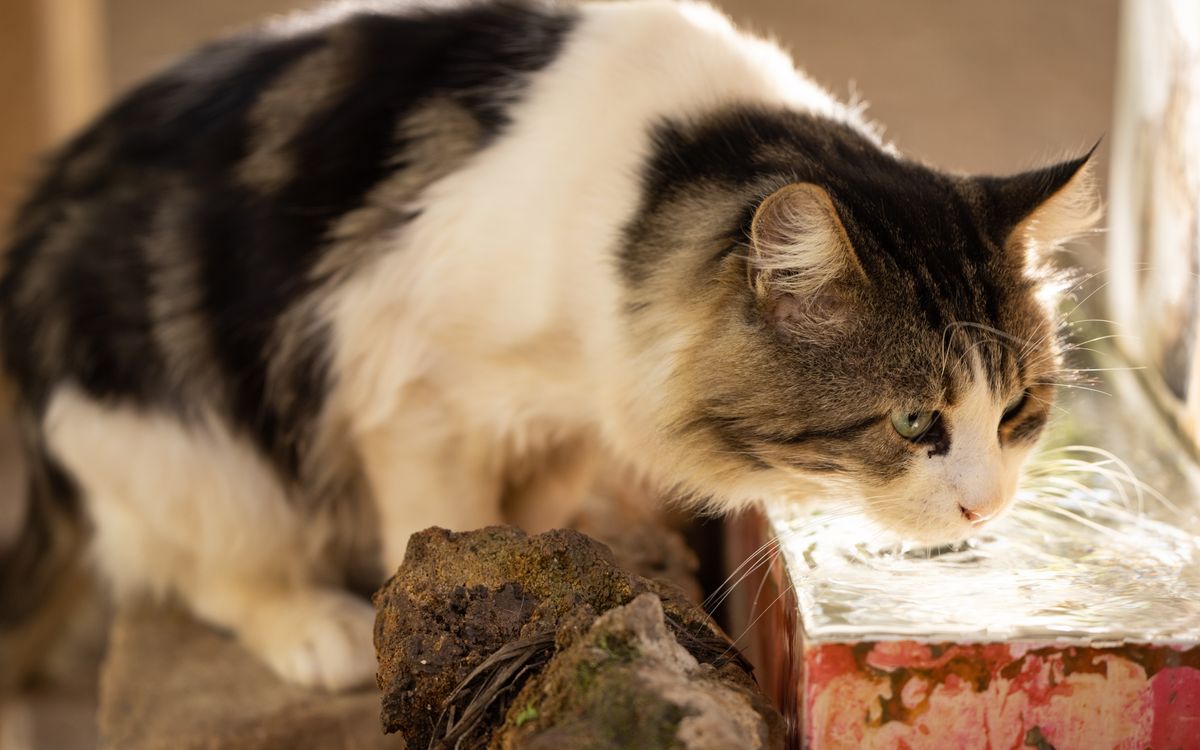
The short version: wet food is the single biggest lever. Put water in more places than one and away from her food. Try a fountain if she likes moving water. Flavor it with a little tuna water or low-sodium broth. Learn the signs of dehydration. And call your vet if she goes off water entirely, which is never normal.
How much water should a senior cat drink a day?
More than most cats manage on their own from a bowl. Cornell's Feline Health Center puts the target plainly: cats need to consume about 4 ounces of water per five pounds of lean body weight per day, so the average 10-pound cat should drink about one cup of water per day. That total includes the water in her food, which is the whole reason food matters so much here. A cat eating mostly dry kibble has to make up almost all of that cup at the bowl, and many simply do not. You can work out her own target, and how much her food already covers, with our cat water intake calculator.
Why older cats often don't drink enough
Cats are poor drinkers by design, and age makes it worse. VCA notes that aging, however, interferes with a cat's sensitivity to thirst, which is already low in cats and predisposes them to dehydration. So an old cat is working from a weak thirst signal that gets weaker, which is why waiting for her to feel thirsty and take herself to the bowl is not a plan you can rely on.
The stakes are higher for her, too. Many of the common diseases of old age lean hard on hydration, and chronic kidney disease, the most common serious illness of senior cats, is the clearest case: kidneys that can no longer concentrate urine make a cat lose water faster, so keeping fluids up is genuinely part of managing the disease. Getting more water into her also helps a cat prone to constipation, where dehydration is often the hidden cause, and a cat prone to urinary problems, where dilute urine keeps the bladder flushed.
The biggest lever: wet food
If you change one thing, change how much of her diet is wet. The gap between wet and dry is enormous: Cornell puts canned food at a moisture content of at least 75 percent against dry food, which contains between six and 10 percent water. Cornell's hydration advice follows from that: feeding wet food and/or adding water to food is another good way to increase water intake. A cat living mostly on wet food is drinking with every meal without knowing it. There is more on that trade-off in wet versus dry food for senior cats, but for hydration alone, wet wins clearly.
You can push it further by loosening her wet food with a spoonful or two of extra water, or warming it slightly to bring out the smell for a fading appetite. If she is committed to her kibble, even switching one meal a day to wet, or floating a little water into the dry, moves the needle.
Simple ways to make water more tempting
Around the food, a handful of small changes add up. None of them are expensive, and old cats respond to convenience most of all.
- Water in more places than one. A stiff old cat will not cross the house for a drink. Put bowls on every floor she uses and near the spots she rests, so a drink is never more than a few steps away.
- Away from the food bowl. Many cats prefer their water separate from their food, an instinct left over from not fouling a drinking source near a kill. Move the water a little apart and some cats drink more.
- Wide, fresh, and daily. A wide, shallow bowl she does not have to dip her whiskers into suits a lot of older cats, and fresh water changed daily beats a bowl that has sat all day. Cornell's baseline is that cats should have access to clean, fresh water at all times.
- A fountain, if she likes moving water. Some cats drink more from a running source. Cornell notes that some cats increase their intake of water when provided with water fountains, but individual preferences among cats for these varies, so it is worth a try but not a guarantee. I wrote a fuller guide to picking a water fountain for a senior cat, clean-ability and all.
- Flavor it. A little taste can tip a reluctant drinker over. Cornell suggests that flavoring the water with a small amount of either water from a can of tuna or low sodium chicken broth can prompt a cat to drink more. Use plain tuna water or a broth with no onion or garlic, and keep a plain bowl available too.
How to tell if your senior cat is dehydrated
Knowing the warning signs lets you act before it gets serious. Cornell lists them directly: signs of dehydration include lethargy, weakness, poor appetite, dry mucous membranes, and, in more severe cases, eyes that are sunken into their sockets.
The easiest of those to check at home is her gums. Lift her lip and touch them: they should feel wet and slick, not dry or tacky. Vets also test skin turgor by gently lifting the skin over the shoulders to see how fast it settles back, though this is a rougher guide in a thin, older cat and better left as one signal among several rather than a verdict on its own. If she seems flat, is eating less, or her gums feel dry, treat it as a reason to call, not to wait.
When to call the vet
Call the same day if your cat stops drinking altogether, will not eat, seems weak or dull, or shows the dehydration signs above, and sooner still if she has a condition like kidney disease where fluids are part of her treatment. A senior cat going off water is never something to watch and wait on. Raise her drinking at her regular check-up too, since a change in how much she drinks, up or down, is often the first clue to something worth catching early.
Frequently asked questions
How much water should a senior cat drink? Cornell's guideline is about 4 ounces per five pounds of lean body weight per day, so a 10-pound cat needs roughly one cup, counting the water in her food. A cat on mostly dry food has to drink far more of that at the bowl than one on wet food.
Why is my senior cat not drinking water? Partly by nature: VCA notes that Aging, however, interferes with a cat's sensitivity to thirst, which is already low in cats. But a sudden drop in drinking, or refusing water entirely, can signal illness and is worth a same-day vet call rather than a wait.
How can I hydrate a cat with kidney disease? The same levers, used harder: lean heavily on wet food, add water to her meals, keep fresh water in several places, and try a fountain and flavored water. Because kidney disease makes a cat lose water faster, some cats in later stages also need fluids given under the skin, which your vet can teach you to do at home.
Do water fountains help cats drink more? Sometimes. Cornell notes that some cats increase their intake of water when provided with water fountains, but individual preferences among cats for these varies. It is worth trying if your cat is drawn to moving water, but it is not a cure, and a fountain only helps if you keep it clean.
What are the signs of dehydration in senior cats? Cornell lists lethargy, weakness, poor appetite, dry mucous membranes, and, in more severe cases, eyes that are sunken into their sockets. Dry or tacky gums are the easiest sign to check at home.
The bottom line
How to get a senior cat to drink more water comes down to two moves: let her food carry more of the load, and make plain water effortless to reach. Biscuit gets most of hers without meaning to, in the wet food her kidneys asked for. Around that, a bowl in three rooms and a fountain she likes on the days she likes it. I do not count her mouthfuls; I watch the wet food going down and her gums staying slick. At sixteen with tired kidneys, that quiet arithmetic is most of what keeps her comfortable.
Sources
- Cornell Feline Health Center, Hydration
- Cornell Feline Health Center, Feeding Your Cat
- VCA Animal Hospitals, Feeding Mature, Senior, and Geriatric Cats