
Constipation in Cats: Why Older Cats Struggle to Go
Constipation in cats is common in old age and easy to mistake for a urinary problem. The signs, why dehydration and sore joints cause it, and what helps.
Constipation in cats is one of those quietly common problems of old age that hides in plain sight, right there in the litter box, and still gets missed. Part of the reason is that the straining looks alarmingly like a urinary problem, so it is easy to worry about the wrong thing or to shrug the whole thing off. And part of it is that constipation in an older cat usually grows out of two things she is already fighting: not drinking enough, and joints too sore to crouch comfortably. Cornell describes constipation as infrequent or difficult emission of hard, dry fecal matter, is a common problem of the domestic cat, and VCA notes it is a condition seen most commonly in mature, middle-aged cats.
This covers what constipation looks like, why senior cats are prone to it, and what actually helps. Whether it is what is troubling your own cat, and how far it has gone, is a question for your vet.
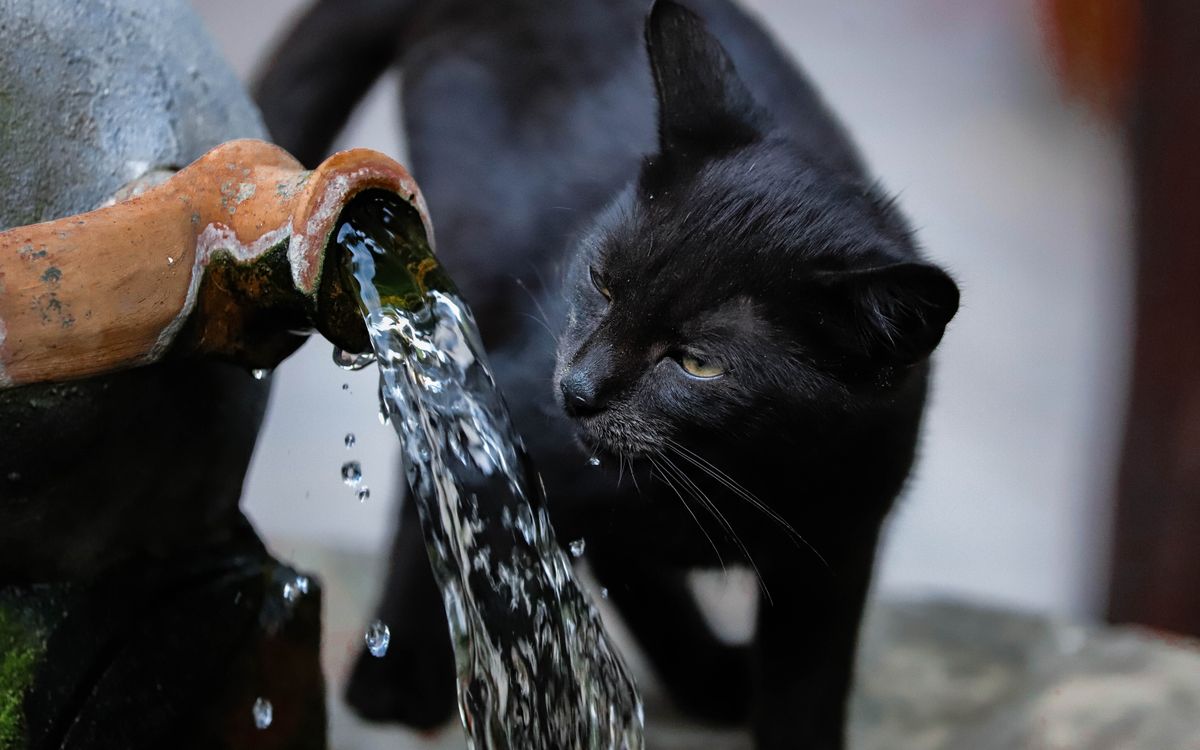
What constipation looks like in a cat
Most of what you notice happens at the litter box. VCA describes a constipated cat this way: they may strain or vocalize in the box, or even defecate outside the box, and when they do go, they may only pass small, hard, dry feces. The detail that trips up so many owners is the next one: you may see them go in and out of the box frequently, similar to when they have urinary disorders. That overlap is why a cat straining in the box is worth a careful look rather than a guess, and why it can be mistaken for the kind of litter box trouble that comes from the urinary tract.
Why older cats get constipated
Two ordinary features of old age do most of the damage. The first is dehydration. VCA points to any disease or condition that results in dehydration as a cause, and the standout among those in a senior cat is kidney disease, which pulls water out of the body and leaves the stool dry and hard. If your cat has chronic kidney disease, constipation often travels with it. The second is pain. VCA names painful conditions that make it uncomfortable to pass stool, such as osteoarthritis: a cat whose hips and spine hurt will avoid the crouch, hold it longer, and let the stool dry out further, which is one more way arthritis quietly shapes an old cat's day. On top of these, VCA lists hairballs, especially in long-haired cats, and Cornell adds obstruction by foreign material or tumors, electrolyte problems, and nerve or muscle disease. In many cats, as Cornell notes, the specific cause is undetermined.
How urgent is it?
Constipation on its own rarely needs an emergency visit. What makes it worth watching closely is the one dangerous problem it can imitate. Use the litter box and her general state to judge.
- Worth noting. She is going a little less often, or the stool looks small and hard, but she is comfortable, eating, and otherwise herself. Worth improving at home and mentioning at her next visit.
- Book a visit. She has strained repeatedly over a day or two, is passing little or nothing, seems uncomfortable, or has started going outside the box. Chronic or repeated constipation needs a vet before it worsens.
- Same day, without fail. A cat, especially a male cat, who is straining hard and producing no urine may not be constipated at all but blocked in the urinary tract, which is a life-threatening emergency. If you cannot tell whether she is straining to poop or to pee, or if straining comes with crying, a tense belly, vomiting, or collapse, treat it as an emergency and go now.
What actually helps
The center of managing constipation is water, because dry stool is the root of it. Getting more fluid into your cat is the most useful thing you can do at home, and the easiest route is her food: leaning on canned food and keeping water in easy reach on every floor she uses, both of which matter for feeding an older cat well. Making the box easier on sore joints helps too, since a cat who can step into a low box without pain is a cat who will not put off going. Beyond home care, this is a problem your vet has real tools for. Cornell describes treatment as making sure that an affected cat is well hydrated, the elimination of causative agents where possible, medical management using laxatives, enemas, and drugs that increase intestinal motility, dietary modification, and in the worst cases surgery. Do not reach for human laxatives or enemas on your own, since several are dangerous for cats. The fixes are safe only when your vet chooses them.
When constipation becomes megacolon
The reason not to let chronic constipation drift is where it can end up. Cornell is direct about the progression: severe, non-responsive cases of constipation may progress to megacolon and obstipation, a condition marked by permanent loss of function in the affected colon. At that stage the colon stretches and stops working, and the only reliable fix is surgery to remove the damaged section. It is an uncommon end and a preventable one, and it is the best argument for treating a cat's constipation early, while water and a good box and a little help from your vet can still turn it around.
When to see the vet
Book a visit for a cat who is straining, passing hard or scant stool, or going less often than usual over more than a day or two, sooner if she is an older cat or has kidney disease or arthritis. Make it an emergency, same day, if she is straining and producing no urine, or if the straining comes with crying, a painful belly, repeated vomiting, or lethargy.
Biscuit's kidney disease means dry stool is a standing risk for her, so the water fountain and the canned food are not only about her kidneys. On the days she seems to be visiting the box without much result, I add a little water to her food and keep a closer eye, and I have learned that catching it in the first day or two is the whole game. Left alone it hardens, in her and in the problem. Caught early, constipation in cats is usually one of the more fixable troubles of an old cat's life.
Frequently asked questions
How can I tell if my cat is constipated? Most of the signs are at the litter box. VCA describes a constipated cat as one who may strain or vocalize in the box, or even defecate outside the box, and who, when she does go, may only pass small, hard, dry feces. The catch is that you may see them go in and out of the box frequently, similar to when they have urinary disorders, so straining is worth a careful look rather than a guess.
How can I help my constipated cat at home? Water is the center of it, because dry stool is the root of the problem. Lean on canned food and keep water in easy reach on every floor she uses, and make the box easy on sore joints with a low box she can step into. Do not reach for human laxatives or enemas, since several are dangerous for cats. If she is straining repeatedly or passing little over a day or two, let your vet take it from there.
When is cat constipation an emergency? When you cannot tell whether she is straining to poop or to pee. A cat, especially a male, who strains hard and produces no urine may not be constipated at all but blocked in the urinary tract, which is life-threatening. If straining comes with crying, a tense belly, vomiting, or collapse, treat it as a same-day emergency and go now.
Sources
- Cornell Feline Health Center, Constipation
- VCA Animal Hospitals, Constipation in Cats