
Senior Cat Peeing Outside the Litter Box: Why, and What to Do
A senior cat peeing outside the litter box is usually medical, not spite: what to check, the emergency to know, and how to make the box easy.
When a senior cat starts peeing outside the litter box, it is almost never spite, and almost never something she can help. In a senior cat it is usually medical or physical: a urinary problem, a disease that is making her produce more urine, joints too sore to climb into a high-sided box, the straining of constipation that can look much like a urinary problem, or the confusion of an aging mind. The first job belongs to your vet, to rule out the medical causes. And one of those causes is an emergency worth knowing about now: a cat who strains but cannot pass urine, especially a male, needs to be seen the same day.
This walks through why it happens and what helps. Which of these is going on with your own cat, and how to put it right, is a question for your vet that starts with a urine test.
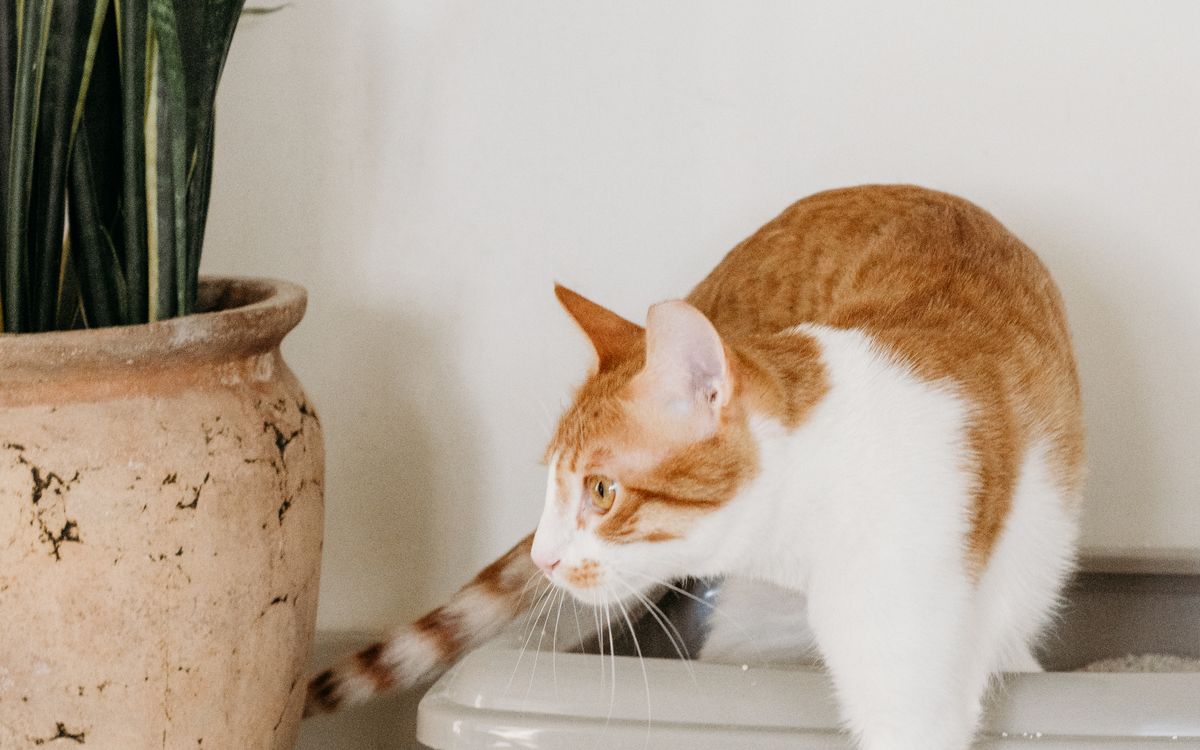
How urgent is a senior cat peeing outside the litter box?
Most of it is a soon-not-now problem, with one sharp exception.
- Worth watching. A one-off after a house move, a new pet, or a box that badly needed cleaning, in a cat who is otherwise well and urinating normally. Sort the trigger and keep an eye out.
- Book a visit. A new or repeating habit of going outside the box in an older cat. This needs a check-up and a urine test to tell a medical cause from a behavioral one.
- Same day, or an emergency clinic. She is straining in the box, going in and out of it, crying, passing only drops or nothing at all, or you see blood. Cornell is stark about why: urethral obstruction is a true medical emergency, and the time from a complete blockage to death may be less than twenty-four to forty-eight hours. Male cats are at greater risk. Do not wait on this one.
Why it is almost never bad behavior
Cats do not soil the house to make a point. When a cat who has used her box faithfully for years suddenly stops, something has changed, and in an older cat that something is usually her body rather than her mood. That is why the first move is a vet visit, not a scolding.
Is she leaking, or peeing outside the box?
These sound like the same thing and are not, and telling them apart points your vet in a different direction. Peeing outside the box is a deliberate act: the cat squats and passes urine, just in the wrong place. Urinary incontinence in cats is the opposite, an involuntary leaking she does not mean to do and often does not notice. Where and when you find it is the tell. A cat leaking urine while she sleeps leaves a damp patch where she has been lying, or keeps wet, stained fur around her hindquarters, rather than a puddle in a chosen spot. International Cat Care describes this kind of leaking as a less common sign of urinary problems in cats, one that tends to show up as dripping of urine where the cat rests, such as on a bed.
Because true incontinence is uncommon and its causes are their own, a partial urinary blockage that overflows, a weakened bladder outlet, or a nerve problem affecting bladder control, it still leads to the same first step: a vet visit and a urine test. If the wet you keep finding is where she rests rather than in places she has picked, say so specifically, because it changes what your vet looks for.
The medical causes your vet will check
- A urinary problem. Feline lower urinary tract disease is, Cornell notes, the number one reason cats visit veterinary practices. Its signs are difficult or painful urination, increased frequency, blood in the urine, and urinating outside the litter box. A cat for whom the box has come to mean pain will often start going somewhere else.
- Making more urine than she used to. Two common senior diseases, chronic kidney disease and diabetes, make a cat drink and urinate a great deal more. A box that fills too fast, or a bladder that fills faster than she can reach it, ends in accidents.
- Sore joints. Arthritis affects most cats over ten, and a tall-sided box she has to climb into can simply hurt too much to use. House soiling is on VCA's own list of arthritis signs for exactly this reason.
- A confused mind. A cat with cognitive dysfunction may forget where her box is, or lose her way to it, as part of the same aging that unsettles her nights.
Once disease is ruled out: make the litter box easy to use
With the medical side handled, the aim is a box she cannot fail. Lower the bar, quite literally: a box with a low side she can step into rather than climb over suits stiff old joints far better than a tall or covered one. Put out more boxes than you think you need, in easy-to-reach spots on every floor she uses, so she never has to travel far or manage stairs to find one. Keep them scrupulously clean, since a fastidious cat will refuse a dirty box. If you have noticed the box turning sharp and ammonia-like, that is worth acting on for her sake and not only yours, because a box you find unpleasant is one she may quietly stop using. And go bigger, with soft, unscented litter. Small changes to the box are often the whole difference between accidents and none.
When to see the vet
Same day if she is straining, passing little or no urine, or you see blood, since a urinary blockage is measured in hours rather than days. Otherwise, book a visit for any new habit of going outside the box, so your vet can check her over and test a urine sample before anyone calls it behavioral.
The puddle by the door is easy to take personally, especially when it lands on a favorite rug. But a cat who has always used her box and suddenly does not is telling you something has changed. She is usually in pain, or unwell, or a little lost, and each of those asks for help rather than a telling-off. Find out why, make the box kind to an old body, and most of the time the rug is safe again. A senior cat peeing outside the litter box is almost always solvable once you know the reason behind it.
Frequently asked questions
Why is my senior cat peeing outside the litter box? In an older cat it is almost never spite and almost never something she can help. The usual causes are medical or physical: a urinary problem such as feline lower urinary tract disease, a disease like kidney disease or diabetes that makes her produce far more urine, arthritic joints too sore to climb into a high box, or the confusion of cognitive change. The first step is a vet visit and a urine test, not a scolding.
Is a cat peeing outside the box a sign of illness? Often, yes. Cornell lists the signs of lower urinary tract disease as difficult or painful urination, increased frequency, blood in the urine, and urinating outside the litter box. When a cat who has used her box faithfully for years suddenly stops, something has usually changed in her body rather than her mood, which is why it earns a check-up rather than a telling-off.
When is a cat peeing outside the litter box an emergency? When she strains but passes little or no urine, especially a male cat. Cornell is stark: urethral obstruction is a true medical emergency, and the time from a complete blockage to death may be less than twenty-four to forty-eight hours. Straining with crying, a tense belly, or only drops of urine is a same-day, go-now situation.
Why is my senior cat leaking urine in her sleep? Passive leaking while she rests, damp bedding or wet hindquarter fur she does not seem to notice, is true urinary incontinence, and it is a different thing from choosing to pee outside the box. It is uncommon in cats and can come from a partial blockage that overflows, a weak bladder outlet, or a nerve problem, so it needs a vet visit and a urine test rather than home management. Tell your vet the wet appears where she sleeps, since that points them in a particular direction.
Sources
- Cornell Feline Health Center, Feline Lower Urinary Tract Disease
- International Cat Care, Cat Carer Guide: Urinary Tract Diseases