
Jaundice in Cats: What Yellow Gums and Eyes Mean
Jaundice in cats is a yellow tint to the gums, eyes, or ears from bilirubin. It is never normal, and points to the blood, liver, or bile ducts.
Jaundice in cats is a yellow tint to the gums, the whites of the eyes, or the ear flaps, and it is never a normal finding. It comes from a pigment called bilirubin building up when the body cannot clear it, and that failure always traces to one of three places: the blood, where red cells are breaking down; the liver itself; or the bile ducts that drain it. Because each of those is serious, yellow gums or eyes in a cat are a reason to see the vet promptly, not to wait and watch. This is a guide to what jaundice means and where it comes from, not a diagnosis for your own cat; other unfamiliar terms are defined in the senior cat health glossary.
The short version: jaundice is a yellow color you will see most clearly in the gums, the whites of the eyes, and the inside of the ears. It is always significant, so it warrants a prompt vet visit, and a same-day one if your cat is also off her food, vomiting, weak, or clearly unwell. The vet's job is to work out which of the three causes is behind it, because the treatment depends entirely on that.
What does jaundice mean in cats?
Jaundice is a sign, not a disease of its own, and understanding what it means starts with one pigment. VCA explains that icterus is also known as jaundice or yellow jaundice, and that it refers to an excessive accumulation of a yellow pigment called bilirubin in the blood and tissues. That pigment has an ordinary origin: bilirubin is a breakdown product of hemoglobin, the protein in red blood cells that carries oxygen to the tissues.
In a healthy cat, that waste is cleared quietly. As VCA describes it, bilirubin should be removed from the bloodstream by the liver and then eliminated into the intestinal tract through the bile. Jaundice appears when that pipeline fails anywhere along its length, so the yellow color is really a signal that this clearing system has broken down somewhere between the blood and the gut.
Where to see jaundice: gums, eyes, and ears
Knowing where to look matters, because a cat's coat hides the most obvious place. VCA points out that since most of a cat's skin is covered by fur, jaundice is most easily seen in the gingivae (gums), the sclerae (white part of the eyes), and the pinnae (ear flaps). So if you are wondering why are my cat's gums yellow, or you notice cat yellow eyes and gums together, those are exactly the places jaundice shows first. Lift her lip in good daylight and look at the gums, and check the whites of her eyes.
One honest caveat: it is not always easy to see. VCA notes that jaundice may be difficult to detect in cats that have pigmented (dark) gums or skin. If your cat has naturally dark gums, the whites of the eyes and the ear flaps become the more reliable places to check, and any doubt is worth a vet's eye rather than your own guess.
Jaundice in cats: causes in three buckets
The jaundice in cats causes almost every owner will hear about sort into one of three groups, and knowing them tells you why the vet runs the tests they do. VCA lays it out cleanly: there are three major causes of jaundice: red blood cell destruction (also known as hemolysis), liver disease, and blockage of the bile duct (called cholestasis). Think of them as before the liver, in the liver, and after it.
The first is the blood. When red cells are destroyed faster than normal, a process VCA calls hemolysis, they release more bilirubin than the liver can keep up with, and the result is a jaundice that comes hand in hand with anemia. The second is the liver itself. As VCA puts it, any disease or condition that damages or destroys liver cells can cause icterus, which is where the common feline liver diseases come in: cholangitis, fatty liver disease, toxins, infections, and cancer. The third is the drainpipe. When bile cannot flow out, bilirubin backs up, and VCA notes the causes of cholestasis include obstruction by gall bladder stones, cancer, trauma to the bile duct, and pancreatitis, which is why a jaundiced cat is often checked for pancreatitis too.
Is jaundice in cats an emergency?
It should always be treated as significant. Jaundice is never a normal or harmless finding, so the honest answer to whether jaundice in cats is an emergency is that it always earns a prompt vet visit, and often a same-day one. How fast to move depends on the rest of the picture: a cat who is bright and eating but has a faint yellow tinge still needs to be seen soon, while a cat who is jaundiced and also weak, collapsed, not eating, or breathing hard needs emergency care now. Because two of the three causes, severe hemolysis and a blocked bile duct, can turn dangerous quickly, jaundice is not a symptom to sleep on.
How the vet finds the cause
The work-up is really about sorting the three buckets. Bloodwork measures the bilirubin itself and looks at the red cells, since a low red cell count points toward hemolysis. Liver enzymes and other values point toward liver disease, and specific enzymes such as ALP and GGT rise when bile flow is blocked. From there, an abdominal ultrasound lets the vet look at the liver, gall bladder, bile ducts, and pancreas, and sometimes a biopsy or specific tests for infections are needed to name the exact cause. It is detailed work, but it is logical, and it is why the vet cannot simply treat the yellow color without first finding its source.
The three causes at a glance
Use this to follow the reasoning, not to diagnose, since only tests can place a given cat.
| Bucket | Where the problem is | Example causes | Common clue |
|---|---|---|---|
| Hemolysis | Before the liver, in the blood | Red cell destruction, toxins, infection | Pale then yellow, anemia, weakness |
| Liver disease | In the liver | Cholangitis, fatty liver, cancer, toxins | Vague illness, weight loss, vomiting |
| Cholestasis | After the liver, the bile ducts | Pancreatitis, gallstones, cancer, trauma | Often with belly pain or pancreatitis |
Frequently asked questions
Why are my cat's gums yellow? Yellow gums are jaundice, a sign that bilirubin is building up because the body cannot clear it. The cause lies in the blood, the liver, or the bile ducts, and none of those is minor. Yellow gums always warrant a prompt vet visit to find out which.
My cat has yellow eyes and gums. What does it mean? Yellow in the whites of the eyes and the gums together is classic jaundice. It means the liver is not clearing bilirubin normally, whether because red cells are breaking down, the liver is diseased, or bile cannot drain. See your vet promptly, and the same day if she is also unwell.
Is jaundice in cats always serious? Yes. Jaundice is never a normal finding in a cat. It ranges from serious to emergency depending on the cause and how sick the cat is, but it always needs veterinary investigation. It is not something to monitor at home.
What does jaundice mean for a cat's liver? Often, though not always, that the liver is involved. Liver disease is one of the three causes, and includes conditions like cholangitis and fatty liver. But jaundice can also come from red cell destruction before the liver, or a blocked bile duct after it, so the vet tests to tell them apart.
Can jaundice go away on its own? Not safely, and not without treating the cause. Because jaundice signals a real problem in the blood, liver, or bile ducts, waiting for it to pass risks letting a treatable illness advance. The color fades once the underlying cause is treated, which is the whole aim of seeing the vet.
The bottom line
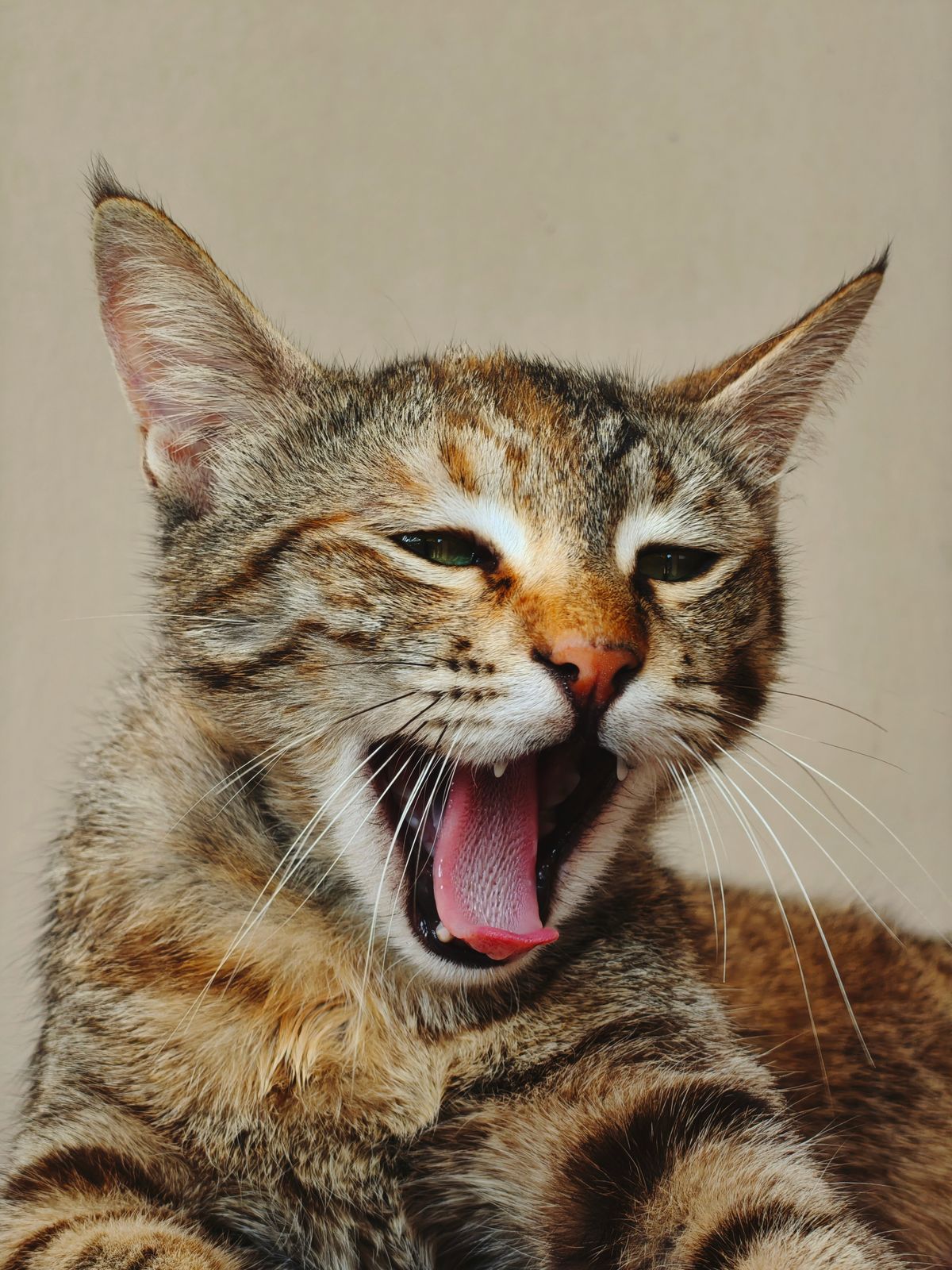
Yellow is the color to act on. A pink gum is a healthy gum, and a yellow one, or a yellow cast to the whites of the eyes, is your cat telling you that something in the blood, the liver, or the bile ducts needs attention now. The cause could be any of three, and only your vet can sort them, but the response to seeing it is always the same: go. I check Biscuit's gums out of habit when she yawns at me, pink and ordinary, and if they ever turned yellow I would not wait a day. That is the one thing worth remembering about jaundice in cats: it is never nothing, and catching it early is what gives the treatable causes their best chance.
Sources
- VCA Animal Hospitals, Icterus (Jaundice) in Cats
- VCA Animal Hospitals, Testing for Jaundice