
Senior Cat Coat Changes: What a Dull, Greasy, or Thinning Coat Means
Senior cat coat changes are often a signal, not just cosmetic. What a dull, greasy, matted, or over-licked coat can mean, and when it is worth a vet visit.
Senior cat coat changes are one of those things that look cosmetic and usually are not. A cat's coat is a fairly honest readout of how she is doing, because keeping it in order takes effort, flexibility, and feeling well enough to bother. So when an old cat's fur goes dull, greasy, or matted, or when a patch of it goes missing, the coat is generally reporting something happening underneath. This is a guide to reading it: what a change in her coat tends to mean, and when it is worth a call to the vet rather than just a gentle brush.
None of this replaces your own vet's eyes on her. It is a map of the usual explanations, not a diagnosis for your particular cat.
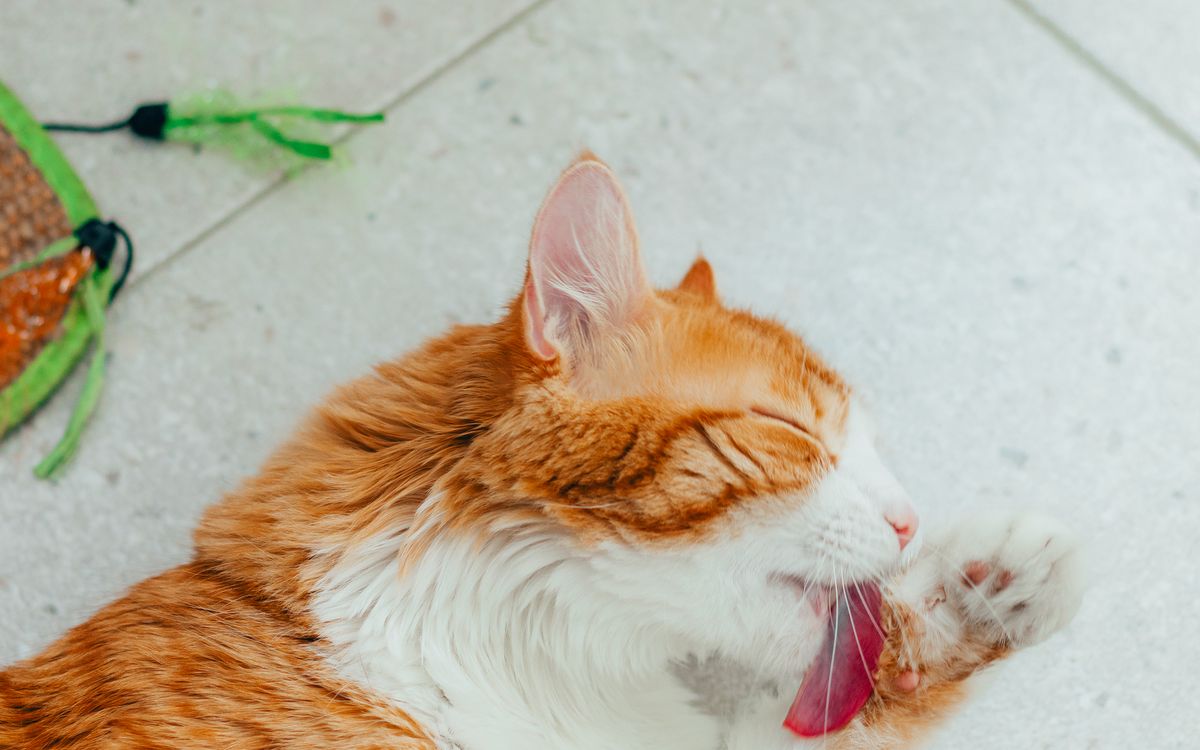
What does a dull or greasy coat mean in an older cat?
Most often, that she has stopped grooming herself properly, and that there is a reason she has stopped. Grooming is athletic, twisting work, and the usual reason an old cat falls behind on it is that the movement has started to hurt. PetMD is direct that many cats develop arthritis in their spine and hips, which makes the motion of grooming painful. The places she can no longer reach, along the spine and the base of the tail, are exactly where the coat first goes rough. A greasy or clumpy coat is compounded by another age change: PetMD notes that grooming habits may also be affected by naturally occurring increased production of oil from the skin.
So a dull, greasy, or matting coat is worth reading as a possible sign of joint pain or, less often, a sore mouth from dental disease that makes licking uncomfortable, before it is anything else. What to actually do about the coat itself, from brushing the spots she cannot reach to handling mats safely, is covered in grooming a senior cat. The point of this piece is what the change is telling you.
When the coat is reporting an illness
Sometimes a poor coat points past grooming to a whole-body problem. Several of the common diseases of old age show up partly in the fur, because a cat who feels unwell grooms less and because some conditions change the coat directly.
An overactive thyroid is the classic. Among its signs, VCA notes that a hyperthyroid cat's fur may appear unkempt, often alongside weight loss and a big appetite. A cat with kidney disease tends to let her coat go as the illness advances and she feels rougher. Poorly controlled diabetes and any condition that stops her absorbing her food well can leave the coat dry and dull, since a healthy coat is built from good nutrition. This is why a coat that has changed noticeably, especially with any other sign like weight loss or increased thirst, belongs on the list of things to mention at the vet rather than filed under old age.
Bald patches and over-licking: the other direction
Coat trouble does not only mean too little grooming. The opposite, a cat licking or chewing herself bald, is its own signal, and in an old cat it often traces back to discomfort. PetMD explains that overgrooming can also indicate that your cat is experiencing pain or discomfort, particularly if they're repeatedly licking one area of their body, and gives the example that back pain may make your cat overgroom themselves on a specific part of their back. In an older cat, that ache is often arthritis. The result shows: as PetMD puts it, a cat licking too much can lose fur in strips along their back, belly, or inner legs.
Pain is not the only cause. PetMD notes that cats may overgroom because their skin is irritated, which can be caused by an infection, an allergy to certain foods, parasites, or substances in the environment, and that some cats use overgrooming to cope with stress or boredom. Because the causes are so different and several of them are treatable, the advice is unambiguous: always schedule a vet appointment if your cat is overgrooming. Over-licking is not a habit to wait out. It is a question to ask your vet.
What is just getting old, and what is not
Not every coat change is a warning. A little more coarseness, some fur that has drifted lighter or grayer at the muzzle, a coat that needs your help to stay tidy: these come with age and are more about your grooming taking over than about disease. What moves a coat change up the list is the company it keeps and how fast it arrived.
Treat these as worth a vet visit rather than a wait:
- A sudden change, over days or a couple of weeks, rather than a slow drift.
- Bald patches, or a spot she licks or chews constantly, especially if the skin under it is red or sore.
- A coat change alongside another sign: weight loss, more drinking, a fading appetite, low energy, or new hiding.
- Sores, scabs, flakes, or a smell in the coat, which point to a skin problem that needs treating.
- A coat that has gone downhill quickly in a cat you know is stiff, since freeing her of pain often lets her groom again.
When to see the vet
Book a visit for over-licking or a bald patch, for a coat that has changed suddenly, and for any coat change that comes with weight loss, thirst, appetite changes, or low mood. A slow, gentle decline in how tidy she keeps herself, in a cat who is otherwise bright and eating well, is usually the ordinary drop-off of grooming duty from her to you, and a good excuse to add a daily brush. When in doubt, raise it at her regular check-up, where a coat change is a useful clue rather than a fuss.
Frequently asked questions
Why is my old cat's fur greasy or matted? Usually because she has stopped grooming that area, and the usual reason is that twisting to reach it hurts. PetMD links poor grooming in older cats to arthritis in the spine and hips and to more oil on the skin with age. A sudden change is worth a vet visit, since easing her pain often lets her groom again.
Why do old cats look scruffy? Because grooming is athletic, and an old cat is often no longer an athlete. Reaching the back, the hips, and the base of the tail takes a twist that a stiff spine will not make, and PetMD describes the result plainly: those areas of an older cat's coat become messy, dull, and unkempt. A scruffy coat in an old cat is therefore often a mobility report before it is a skin one, which is why arthritis sits near the top of the list when the coat goes downhill, and why a gentle brush over the parts she cannot reach is both a kindness and a check.
What does senior cat overgrooming with bald patches mean? It often means something is bothering her. PetMD notes that overgrooming can also indicate that your cat is experiencing pain or discomfort, and that a cat may also overgroom because their skin is irritated by an allergy, parasites, or infection, or to cope with stress or boredom. Their advice is simple: always schedule a vet appointment if your cat is overgrooming.
When an old cat's coat looks bad, is it a sign of illness? Yes. A hyperthyroid cat's fur may appear unkempt, and kidney disease, diabetes, and poor nutrient absorption all tend to leave the coat dull, because a cat who feels unwell grooms less and a healthy coat depends on good health underneath. A coat change with any other sign deserves a check.
Is it normal for a senior cat's fur to change color? Some graying or lightening, especially around the face, is a normal part of aging and not a concern on its own. What matters more is the texture and upkeep of the coat, and whether the change came with anything else.
The bottom line
Read your old cat's coat as a gauge rather than a grooming grade. A slow slide into needing your help with the brush is ordinary, and mostly a cue to step in. A sudden change, a bald or over-licked patch, or a rough coat paired with any other sign is where senior cat coat changes stop being cosmetic and become an early-warning system worth a vet's read. Biscuit's coat is not the glossy thing it was at three, and I do half her grooming for her now. But I still run my hands through it every day, partly for her and partly because it is the fastest way I have to know, before she would ever show me any other way, that something has changed.
Sources
- PetMD, Matted Fur and More: Grooming Your Senior Cat
- VCA Animal Hospitals, Hyperthyroidism in Cats
- PetMD, Cat Overgrooming: Why Is My Cat Licking Itself So Much?