
Grooming a Senior Cat: Matted Fur, Greasy Coat, and Overgrown Claws
Grooming a senior cat becomes your job when age makes it hurt for her. How to handle a matted or greasy coat and overgrown claws, and when to get help.
Grooming a senior cat quietly becomes your job as she ages. A cat who was always immaculate can, in old age, start to look a little unkempt: a coat that has gone rough or greasy, tufts that clump into mats, claws that click too loudly on the floor. An old cat with a greasy coat, not grooming the way she used to, is easy to read as letting herself go. It is really the opposite. A cat grooms herself many times a day, and when she stops doing it well, it is almost always because the job has become hard or painful, not because she has stopped caring. When that happens, a share of the grooming quietly becomes yours.
This covers why a senior cat's matted fur and greasy coat happen and how to take her grooming over gently, from brushing to nails. A coat or a habit that has changed can also be a sign of something medical, so anything sudden is worth mentioning to your vet.
Why senior cats stop grooming themselves
Grooming is athletic work, all twisting and stretching, and an old body is not built for it anymore. PetMD is direct about the main reason: many cats develop arthritis in their spine and hips, which makes the motion of grooming painful, so that when cats experience pain moving, they can't stretch their heads to groom certain spots like they used to when they were more limber. The spots she can no longer reach, along the spine, the base of the tail, the back legs, are exactly where the coat goes rough first. Two other things pile on: PetMD notes that your older cat's grooming habits may also be affected by naturally occurring increased production of oil from the skin, and that senior cats are also prone to obesity, which may further their difficulties in grooming. A greasy or unkempt coat, then, is often the first visible sign that her joints hurt.
Brushing: doing the grooming she can't
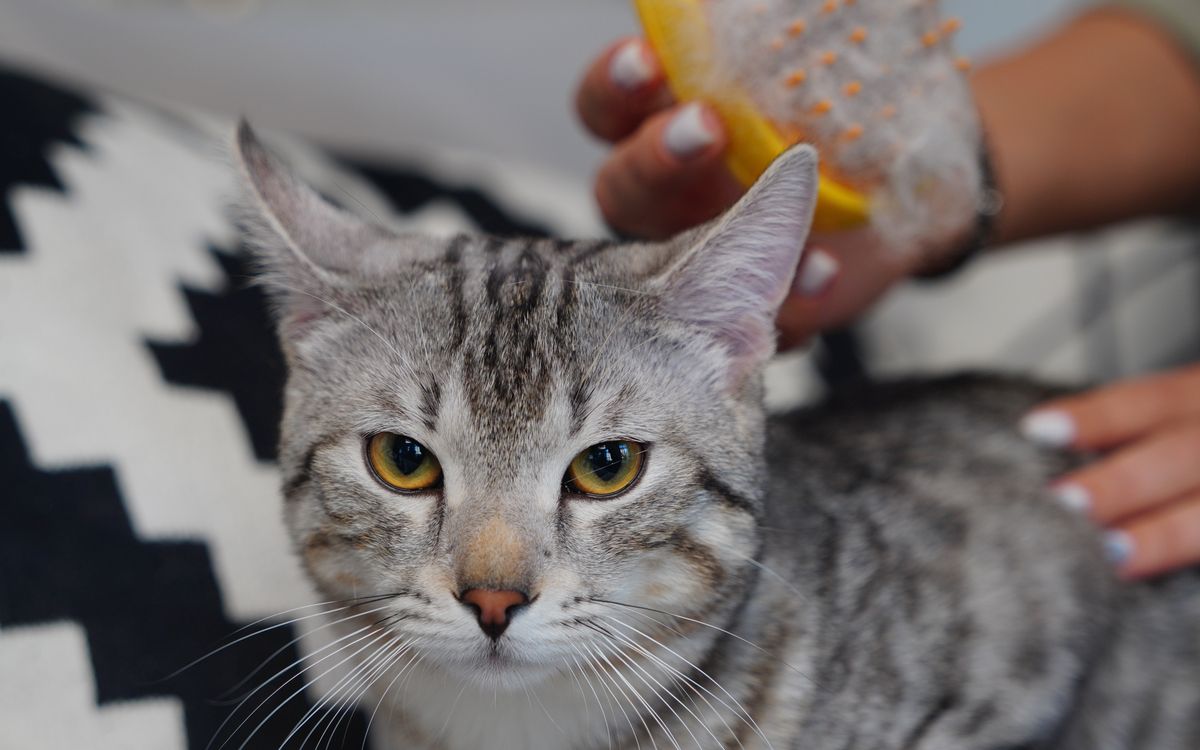
The single most useful thing you can do is brush her, regularly and gently. It does more than tidy her up. As Cornell notes, gently brushing or combing removes loose hairs and stimulates circulation, and it also spreads her skin oils and cuts down on the hair she swallows, which means fewer hairballs. PetMD suggests that daily brushing is ideal, especially with medium to long-haired breeds. Use a soft brush or a fine comb, and go with the coat, gentle over the bony, achy places, since a sore cat will not sit for rough handling; there is a rundown of gentle brushes worth choosing if you are not sure which. Short, frequent sessions beat long ones. For many old cats, this daily few minutes becomes something they look forward to, the closest thing to the mutual grooming they would once have shared with another cat.
Matted fur: do not cut, get help
Mats are not just untidy, they hurt. A mat pulls tight on the skin, traps moisture and dirt, and can hide sores underneath. The rule with a real mat is a firm one: do not go at it with scissors, because a cat's skin is thin and tents up into the mat, and it is frighteningly easy to cut her. PetMD's advice is the safe one: if your cat's fur is matted, bring him to a groomer or your veterinarian, as matted fur won't go away on its own. A groomer or vet can shave a mat out safely in seconds. Your job is to prevent the next one, by combing the reach-me-not spots often enough that tangles never get the chance to set.
Overgrown claws
An old cat who moves less and scratches less does not wear her claws down the way she used to, and they keep growing. Left alone, this is not harmless. VCA warns that in severe cases, a cat's nails can become so long that they curve around and grow into the paw pads, causing an infection, which is painful and entirely preventable. That is why, as VCA notes, older cats may need help with nail trims, because they tend to be less active and may be less inclined to use a scratching post. Check her claws often and trim every two to four weeks, or more often if they grow fast. Use proper cat clippers, take off only the sharp tip, and avoid the quick, the pink part with the blood supply. If you do nick it, VCA's fix is simple: apply a small amount of styptic powder (available at any pet supply store) to the end of your cat's nail to stop the bleeding. If she will not tolerate it, your vet or groomer can do it quickly at a check-up.
When to see the vet
Treat a coat that has suddenly gone rough or greasy as a possible sign rather than just cosmetic, since it often points to arthritis pain or, less commonly, an underlying illness worth ruling out. Get any claw that has curled into or near the paw pad seen promptly, as that needs freeing and often treating. And if grooming has fallen off sharply, it is worth a mention at her next visit, because keeping her comfortable enough to want to groom again is part of the job too. The opposite problem, a cat who grooms too much and licks a patch of fur bald, is a different signal worth its own look at overgrooming.
Biscuit lets me comb the base of her spine every evening now, the spot she cannot twist round to reach, and she leans into it with her eyes half shut. It took the place, without my quite noticing, of the grooming she used to do herself. She looks better for it, but that is not really why we do it. It is ten quiet minutes of being cared for, which at sixteen is worth as much as a tidy coat.
Sources
- PetMD, Matted Fur and More: Grooming Your Senior Cat
- VCA Animal Hospitals, How to Trim a Cat's Nails
- Cornell Feline Health Center, Loving Care for Older Cats