
Is My Senior Cat Sleeping More Than She Should?
Senior cats sleep more, often 16 to 20 hours, and most of it is normal. The real question is whether it changed from her normal, and the signs that mean vet.
A senior cat sleeping more is usually doing exactly what old cats do best. Cats are champion sleepers at any age, and old cats raise it to an art. If your old cat seems to be sleeping all day, swapping her waking hours for one long nap by the radiator, you may be wondering whether it is just age or a sign of something wrong. Mostly it is age. But sleep is one of those behavior changes of age where the amount matters far less than whether it has changed, and there is a simple way to tell the ordinary from the concerning.
This is a guide to what is normal and what is not, rather than a diagnosis. If your cat's sleep has shifted along with anything else, a vet is the one to sort out why.
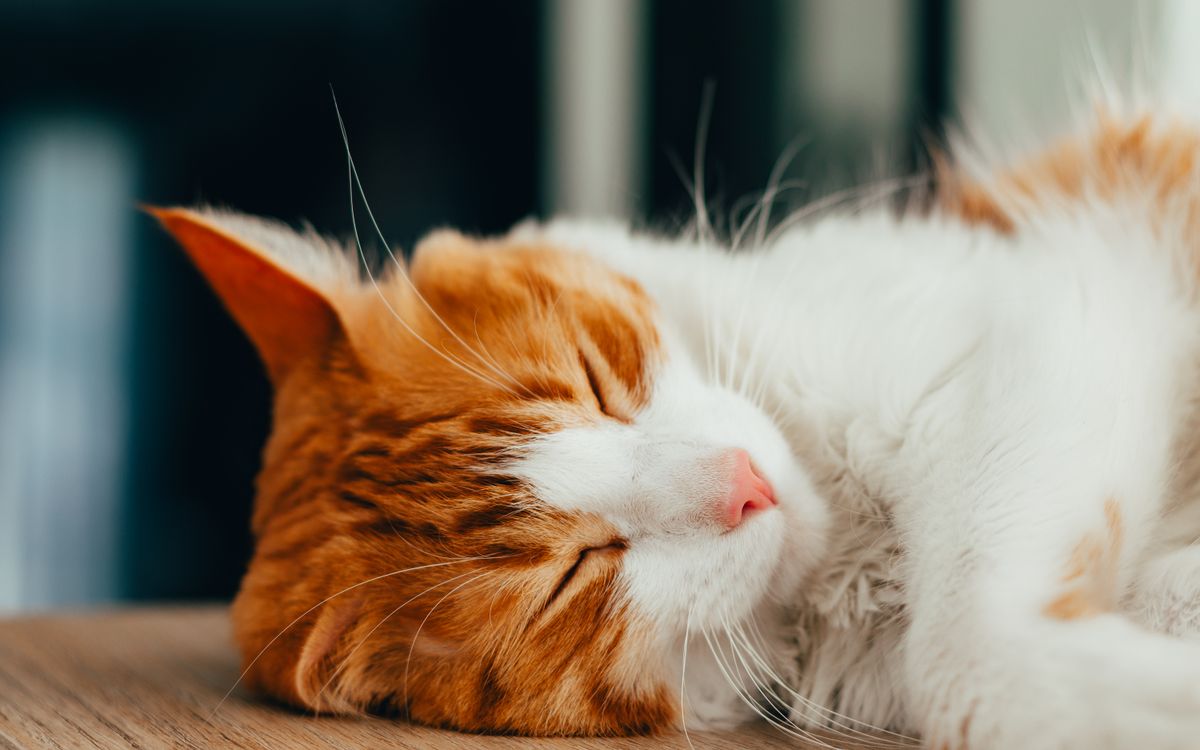
How much do senior cats sleep?
A lot, and more with age. Where a younger adult cat might sleep twelve to sixteen hours a day, a senior often settles into sixteen to twenty, and a very old cat can spend most of the day resting. There are good, harmless reasons for it: an old cat carries less muscle and runs on a slower engine, so she tires sooner and conserves energy by sleeping. And since arthritis makes being up and about less comfortable, lying still and warm simply wins more often. A cat who sleeps eighteen hours but is bright, hungry, and engaged when she is awake is almost certainly fine.
The rule that matters: has it changed?
The number of hours means little on its own. What tells you something is a change from your cat's own normal. A cat who has always slept eighteen hours and still greets you, eats well, and moves comfortably is being herself. A cat who used to sleep thirteen and has slept nineteen for the past week, seems dull or flat when she is awake, and has lost interest in food is telling you something different. Watch the trend against her baseline, not the clock.
When more sleep is a red flag
Sleeping more becomes a reason to call the vet when it keeps company with other signs. Take it seriously if the extra sleep comes with a fading appetite, real lethargy or weakness, hiding, or a cat who seems dull and disengaged, in a way that can look like low spirits, rather than simply restful. Two patterns are worth knowing. One is pain: an achy cat rests more because moving hurts. The other is the aging brain, since VCA lists among the signs of cognitive dysfunction Cats may sleep more during the day and awaken during the night, often pacing and yowling, so a cat who sleeps all day and roams the house at 3am may be showing cognitive change. The ASPCA also files sleeps more during the day among the aging changes worth having checked.
What to do
Get to know her normal, so a change stands out. If her sleep has clearly increased, or comes with dullness, weakness, or a drop in appetite, book a visit and mention what shifted and when. Otherwise, let her rest, and make it comfortable: a warm, easy-to-reach bed in a quiet, draft-free spot suits a cat who is spending more of her day in it. Gentle play when she is up keeps a little muscle and interest alive, but on her terms. A regular check-up is how you make sure the long naps are just age, and not the quiet edge of something else.
Biscuit sleeps most of the day now, curled where the afternoon sun lands on the carpet, and I have stopped reading anything into the hours themselves. What I keep an eye on is the cat she is when she wakes: whether she stretches and comes looking for dinner, or whether the light has gone a little out of her. The first is just an old cat enjoying her rest. The second would send me to the phone. A senior cat sleeping more is usually just age; it is the company it keeps that tells you when it is not.
Frequently asked questions
Do older cats sleep more? Yes. As cats age they tend to sleep more, and a senior often settles into sixteen to twenty hours a day where a younger adult might sleep twelve to sixteen. An old cat carries less muscle and runs on a slower engine, so she tires sooner and rests to conserve energy, and stiff, arthritic joints make lying still and warm the easier choice. On its own, more sleep in an old cat is usually normal.
Is it normal for a senior cat to sleep all day? Often, yes. A cat who sleeps most of the day but is bright, hungry, and engaged when she is awake is almost certainly fine. What matters is not the number of hours but whether it has changed from her own normal, and whether the extra sleep comes alone or alongside other signs.
When is a senior cat sleeping too much? When the extra sleep keeps company with other changes: a fading appetite, real lethargy or weakness, hiding, or a cat who seems dull and flat when awake rather than restful. Two patterns are worth knowing, pain and the aging brain, and VCA lists among the signs of cognitive dysfunction Cats may sleep more during the day and awaken during the night, often pacing and yowling. A clear increase, or sleep that comes with those other signs, is worth a vet visit.
Sources
- ASPCA, Older Cats with Behavior Problems
- VCA Animal Hospitals, Senior Pet Cognitive Dysfunction