
Senior Cats and Cold Weather: Keeping an Older Cat Warm in Winter
Senior cats and cold weather: older cats feel the chill more. How to keep an indoor cat warm, ease stiff winter joints, and the winter hazards to avoid.
Senior cats and cold weather ask a little more of each other than you might expect. An older cat feels the chill more than a young one: she moves around less, carries less muscle and fat to hold heat, and her joints stiffen when the temperature drops. Most senior cats live indoors, so winter care is mostly about warm spots and comfort, but a cat who goes outside faces real cold-weather dangers worth knowing.
This is a practical guide to keeping an older cat warm and safe through the cold months, indoors and out. Anything that seems like more than ordinary cold discomfort, shivering, weakness, or a sudden downturn, is a reason to call your vet rather than wait for spring.
Why does cold weather hit a senior cat harder?
A few things stack up against an older cat in winter. She is less active, so she generates and seeks out less body heat than she used to. Age often thins the coat and trims the muscle and fat that help hold warmth in. And cold has a particular grip on stiff joints: a cat with arthritis tends to be noticeably worse on a cold morning, slower to get up and less willing to move, in the same way a bad knee aches when the weather turns. Warmth is the simplest counter to that stiffness, which is why a warm resting place earns its keep most in the months she needs it. None of this makes winter dangerous for a comfortable indoor cat, but it does mean the season is worth a little planning on her behalf.
How can I tell if my house is too cold for her?
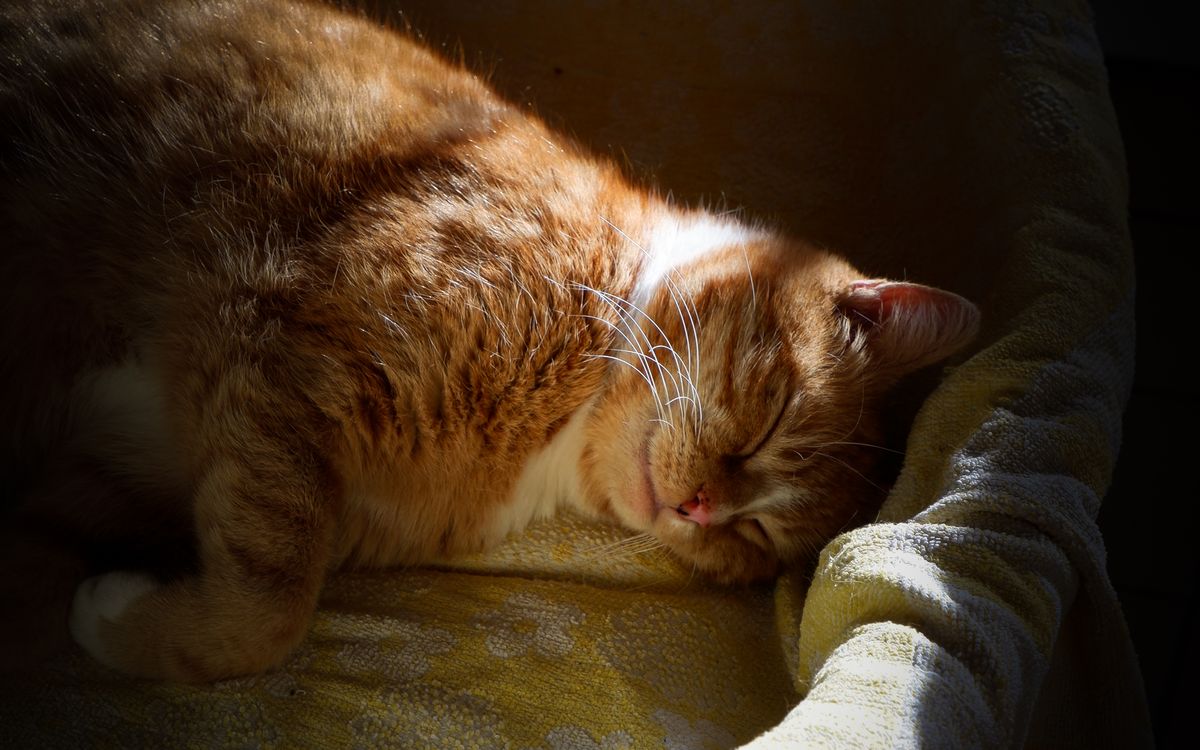
Cats are good at telling you, if you watch. A cat who is too cool will hunt down the warm spots and stay there, curling up tight with her paws and tail tucked in, pressing against a radiator, a sunny sill, a warm laptop, or you. If she suddenly wants to be on your lap far more than usual in winter, warmth is often the reason. The ASPCA offers a simple rule of thumb that works for the indoors too: if it's too cold for you, it's probably too cold for your pet, so keep your animals inside. Mild cool-seeking is just a cat being sensible. What is not normal is shivering, unusual sluggishness, or skin that feels genuinely cold to the touch, and those belong in the next section as reasons to warm her up and call the vet.
How do I keep an indoor senior cat warm?
The goal is a few reliably warm, easy-to-reach places to rest. The ASPCA's advice is to make sure your companion animal has a warm place to sleep, off the floor and away from all drafts, adding that a cozy dog or cat bed with a warm blanket or pillow is perfect. A warm bed in a quiet corner, raised slightly off a cold floor, is most of the job. A few small things help too:
- Follow the sun. Put a bed or blanket where the winter sun lands during the day, and move it as the patch moves if you can.
- Add gentle heat, safely. A microwavable heat pad or a low-wattage pet-safe heated bed she can move off of gives steady warmth without the burn risk of a space heater or an electric blanket. She should always be able to leave the heat, not be trapped on it.
- Layer her usual spots. A soft blanket over her favorite perch, and one on your lap, cost nothing and get used.
- Mind the drafts. A bed tucked out of the path between a door and a cold window stays much warmer, a point covered further in the guide to comfort at home.
Does she need to eat or drink differently in winter?
For a warm indoor cat, not really, and it is worth not overfeeding her just because it is cold. The picture changes for a cat exposed to real cold. Cornell notes that cats burn more calories to stay warm in the winter, so feeding them a bit more than during the warm weather months will help them avoid losing weight, which applies to an indoor-outdoor or outdoor cat, not a cat dozing by the radiator. If you are unsure which way her weight is heading, the guide on feeding a senior cat covers keeping an eye on it. Water matters year-round, in summer heat and winter cold alike, and cats are poor drinkers at the best of times. Dry, heated indoor air and a chilly walk to a distant bowl can nudge her intake down, so keep fresh water within easy reach of her warm spots, and lean on wet food for the moisture it adds.
How do I protect an outdoor cat in cold weather?
Here the stakes are higher, and the advice is firmer. Cornell is direct that winter weather hits outdoor cats hardest, since the combination of low temperatures, wind, and snow/ice can predispose cats to hypothermia and frostbite, and that the best way to avoid these problems is to keep cats indoors at all times. For an old cat, whose defenses against the cold are already thinner, that guidance counts double. If she truly cannot be kept in, Cornell says to provide shelter with adequate bedding (straw is a good choice, avoid newspaper, cloth, and hay), and that where possible the shelter should be raised off the ground to avoid body heat loss into the ground. Keep food and water out there too, and take steps to stop the water freezing.
Winter hazards for cats: antifreeze and cold-weather dangers
Cold weather brings a few dangers that have nothing to do with temperature. The worst is antifreeze. Cornell warns that antifreeze is extremely toxic to cats if ingested, and its taste is attractive to cats, so clean up spills at once and store it sealed and out of reach. A tiny amount can be fatal, and if you suspect she has licked any, it is a same-minute emergency. Two more to keep in mind for a cat with any outdoor access:
- Warm car engines. Cats seek heat, and a parked car's engine is a magnet. Cornell advises to honk your horn or bang on the hood of your vehicle before starting it, to prompt any cats that may be seeking shelter in the engine compartment to leave.
- De-icing salt. The ASPCA notes it can become dangerous when chemicals from ice-melting agents are licked off of bare paws, so wipe the paws of a cat who has been outside.
When to see the vet
Most winter care is comfort you can manage at home, but a few things warrant a call. Treat real shivering, marked weakness or wobbliness, or a body that feels cold to the touch as urgent: warm her gently with blankets and get her to a vet, since a cat that chilled needs proper rewarming and a check. Short of an emergency, if her arthritis visibly worsens over the winter, stiffer, slower, more reluctant to jump, it is worth a check-up to review her pain relief for the season rather than letting her tough it out. And any suspected antifreeze contact is an immediate trip, not a wait-and-see.
Frequently asked questions
How cold is too cold for a cat? A useful rule from the ASPCA is that if it's too cold for you, it's probably too cold for your pet. A comfortable heated home is fine; an old cat starts to struggle in a genuinely cold house or outdoors in freezing, wet, or windy conditions.
How do I keep my senior cat warm in winter? Give her a few warm, draft-free places to rest. The ASPCA suggests a warm place to sleep, off the floor and away from all drafts, plus a cozy bed with a blanket. Follow the sun, and add gentle, escapable heat like a microwavable pad.
Does cold weather make cat arthritis worse? Cold tends to stiffen sore joints, so an arthritic cat is often visibly worse in winter. Warmth eases the stiffness, which is why a warm bed matters most in the cold months. If she is clearly struggling, ask your vet about her arthritis care.
Keeping outdoor cats warm in winter: how do I do it? Bring her in if you possibly can. Cornell says the best way to avoid these problems is to keep cats indoors at all times. If not, provide a raised, insulated shelter with straw bedding, plus food and unfrozen water.
How dangerous is antifreeze to cats? Extremely. Cornell warns that antifreeze is extremely toxic to cats if ingested, and its taste is attractive to cats. Suspected contact is an emergency; the ASPCA Poison Control line is (888) 426-4435.
The bottom line
Keeping a senior cat happy in the cold is not complicated: a warm bed she can reach, a sunny spot, a little extra care for stiff joints, and common sense about the outdoor dangers of the season. Biscuit has claimed the warmest radiator in the house as her winter throne, and on the coldest mornings she is slower off it than she used to be, so this year she has a heated pad in her favorite corner and a blanket where the afternoon sun lands. Senior cats and cold weather get along fine with a bit of planning: give an old cat somewhere warm to be, keep the real hazards out of her way, and she will spend the winter exactly as she should, asleep and toasty.
Sources
- Cornell Feline Health Center, Cold Weather Tips for Cats
- ASPCA, Cold Weather Safety Tips