
Senior Cats and Hot Weather: Keeping an Older Cat Cool and Safe
Senior cats and hot weather need extra care: older cats overheat faster. Signs of heatstroke, when it is an emergency, and how to keep her cool all summer.
Senior cats and hot weather are a combination worth taking seriously, because an old cat has less margin in the heat than a young one does. The same summer afternoon that leaves a healthy adult cat sprawled and lazy can push an older cat, especially one already managing a health condition, toward genuine trouble. Heatstroke in older cats moves fast, and the cats it strikes hardest are the old, the ill, and the very young. Almost all of it is preventable with a few small habits, though, and the warning signs are learnable in an afternoon.
This is general guidance, not a substitute for your vet, who knows your cat's particular risks better than any article can.
Why hot weather is harder on a senior cat
Age itself is a risk factor. PetMD lists senior cats among the groups in which heatstroke is most common, alongside young kittens and overweight cats. The reasons stack up with age: an older body regulates temperature less reliably, and the conditions common in later life each make the heat harder to weather.
That last point matters most for the cats this site is about. PetMD names cats with underlying issues such as kidney disease, diabetes mellitus, or mobility issues that hinder their access to water, and cats with heart, respiratory, or neurological conditions, as being at higher risk. Read down that list and it is a roll call of senior-cat illnesses. A cat with chronic kidney disease is already fighting to stay hydrated. A cat with arthritis may not get up to cross the room to her water bowl as often as she should. A cat with heart disease has less reserve when her body is working to shed heat. The ASPCA puts the elderly in the same sentence as the overweight and those with heart or lung disease, all of whom should be kept cool in air-conditioned rooms as much as possible.
None of this means your old cat cannot enjoy a warm day. It means the margin is thinner, so the habits below are worth building before the first heatwave rather than during it.
Signs your senior cat is overheating
Cats do not sweat their way cool the way we do, and a cat panting in the heat is not the everyday sight a panting dog is. Cornell lists the signs of heatstroke in cats as weakness or collapse, excessive panting, drooling, vomiting, and diarrhea, and warns plainly that heat stroke can become life-threatening very quickly. VCA describes the picture in cats as excessive panting, lethargy, and distress; unconsciousness and death can quickly follow.
It helps to think of it in stages rather than as a single alarm:
- Worth watching. Restlessness, seeking out cool tile or shade, sweaty paw prints, grooming more than usual, faster breathing. She is working to cool herself. Get her somewhere cooler and make sure water is right there.
- Get her cool and call your vet. Panting, drooling, obvious lethargy, reddened gums. A cat who has reached open-mouthed panting is past comfortable and needs cooling and a phone call now.
- Emergency, go now. Collapse, disorientation, vomiting or diarrhea in the heat, wobbling or an inability to stand, seizures. PetMD is blunt about the stakes: the inflammation heatstroke sets off puts the cat at risk of organ failure and potentially death. This is a same-minute trip to the nearest open clinic.
An old cat with a heart or breathing condition can slide down that list faster than a healthy one, which is the whole reason to act early rather than wait and see.
What to do if your cat overheats
If you see the warning signs, cool her down and get help, in that order and at the same time. Cornell's instruction is to immediately place your cat in a cool area with a draft, gently wet her fur with cool (not very cold) water, and contact your veterinarian immediately. VCA gives the same first step: cool your cat's body temperature by rinsing it with cool (not cold) water.
The detail that trips people up is the water temperature. Cool, not cold, and not ice. Very cold water can make the blood vessels at the skin clamp shut and actually trap heat in, so a lukewarm-to-cool rinse or damp towels are what you want, not an ice bath. Then call the clinic while you cool her, and go in even if she seems to rally, because heatstroke can do damage inside that is not visible from the outside.
How hot is too hot for an older cat?
The number that matters is her body temperature, not the reading on the porch thermometer. PetMD sets the line clearly: heatstroke in cats is when a cat's body temperature surpasses 104 F. You will not be taking her temperature in the moment, so treat the behaviors above as your gauge instead. Humidity, still air, and a lack of shade or water all push a cat toward that line faster than the air temperature alone suggests, which is why a parked car is so deadly: VCA notes that most cases of heatstroke occur when a cat is left in its carrier in an unventilated car. The ASPCA is equally firm that you should never leave your animals alone in a parked vehicle, heat aside. For an old cat, even a warm, closed room with no draft on a humid day is worth fixing before it becomes a problem.
Keeping a senior cat cool all summer
Most of prevention is quiet and cheap. Cornell's own heat-safety advice is a good backbone, tuned here for an older cat:
- Water, everywhere and always. Cornell's first tip is to maintain hydration by assuring that fresh water is available at all times, and it notes that a running water source like a fountain may encourage some cats to drink more. For a stiff old cat, put bowls on every floor she uses so she never has to travel far, and lean on wet food for the moisture it adds. A water fountain earns its place in summer if she likes moving water.
- Cool places to lie. Cornell suggests cooling mats, or wrapping ice packs in blankets, to make a cool spot, and ice cubes for your cat to play with. A shaded tile floor or a fan she can lie in front of does much the same job.
- Air conditioning when it is extreme. When a heatwave is forecast, Cornell advises keeping cats indoors, in air-conditioned areas, which matters double for an old or unwell cat.
- Brush, do not shave. The ASPCA notes that brushing cats more often than usual can prevent problems caused by excessive heat by clearing out the loose undercoat that traps warmth. A gentle grooming routine does more than a haircut.
- Close off the hot traps. Cornell reminds owners to check sheds, garages, greenhouses, barns, and other outbuildings where a cat can get shut in, and to use pet-safe sunscreen on the ear tips and nose of cats with light colored fur.
Frequently asked questions
Do cats get heatstroke? Yes. Cats overheat less often than dogs, partly because they are better at seeking shade and staying still, but they absolutely can, and when it happens it is an emergency. Cornell warns that feline heat stroke can become life-threatening very quickly.
Are older cats more at risk in the heat? Yes. PetMD lists senior cats among the highest-risk groups, along with cats carrying the illnesses common in old age, such as kidney disease, diabetes, and heart or breathing conditions. An older cat also may not travel to her water bowl as readily, so hydration takes more attention.
Is panting in a cat a bad sign? In the heat, treat it as one. Panting is not a cat's ordinary way of cooling off, and Cornell lists excessive panting among the signs of heat stroke. A cat panting on a hot day should be cooled down and watched closely, and if it does not settle quickly, called in to your vet.
Should I shave my senior cat for summer? Brushing is the better tool. The ASPCA recommends brushing cats more often than usual to clear the loose undercoat, rather than shaving. A cat's coat also offers some protection from sunburn, so talk to your vet or groomer before removing it.
When to call the vet
Call the same day, or head to an emergency clinic, if your cat pants, drools, goes flat or wobbly, vomits, or collapses in the heat. With an old cat, and especially one with a heart, kidney, or breathing condition, do not wait to see if it passes. It is also worth raising heat management at her regular check-up, so you have a plan in place before the hottest weeks arrive. The cold months bring their own version of this at the other end of the year.
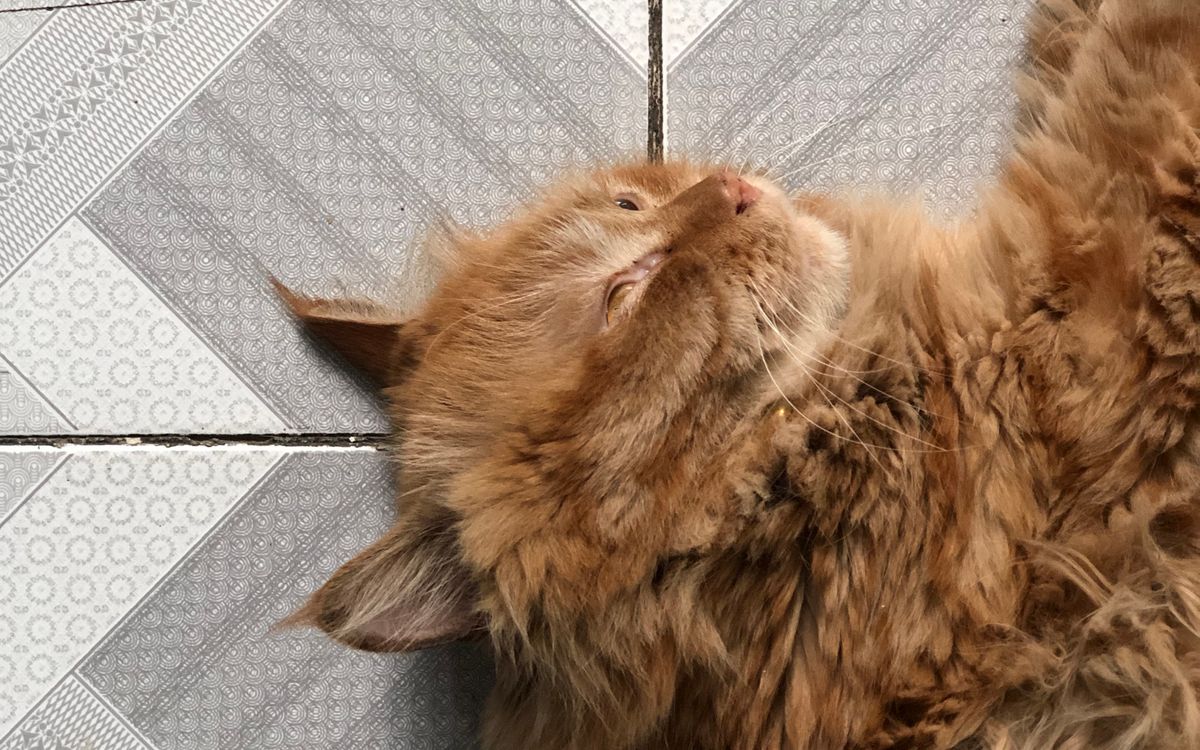
Biscuit spends July and August as a puddle of orange cat on the coolest tile in the house, moving only to follow the shade across the floor. At sixteen, with her kidneys already asking a lot of her, I keep the fan on for her, water in three rooms, and the car firmly off the list of places she goes when it is hot. Senior cats and hot weather can coexist perfectly well. It just takes you doing a little of the thinking her younger self used to do for herself.
Sources
- Cornell Feline Health Center, Feline Heat Safety
- VCA Animal Hospitals, Emergencies in Cats
- PetMD, Heatstroke in Cats: Signs, Treatment, and Prevention
- ASPCA, Hot Weather Safety Tips